A small bird turns thorns into tools for holding prey and storing food. How does it do it, and where can shrikes be seen in Arab countries?
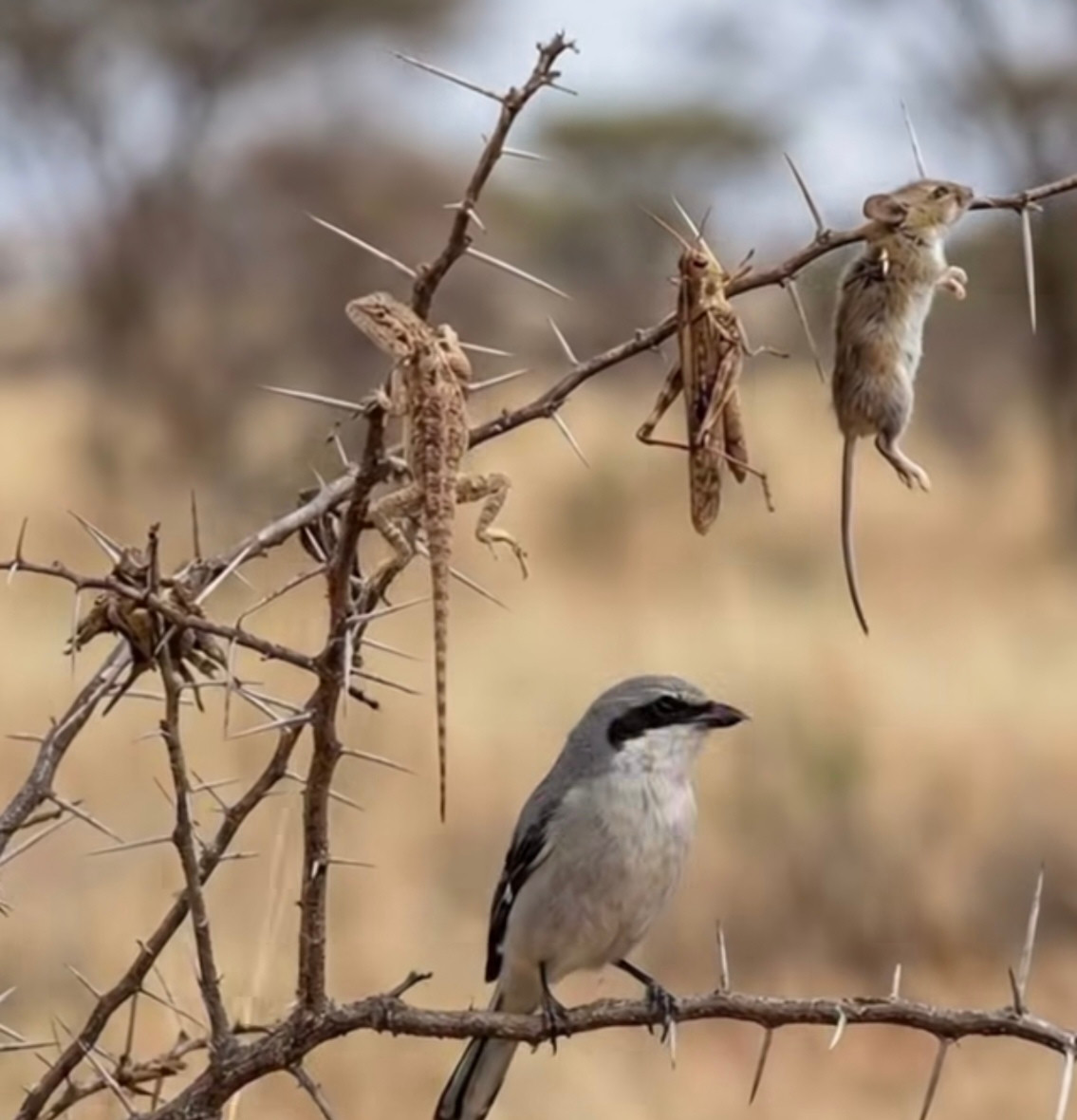
A thorny branch, an impaled mouse, and a small bird with a black mask standing nearby. The scene resembles a gallows in the wild, yet its maker needs neither an eagle’s bulk nor a falcon’s talons. This is the shrike, a bird that turns a thorn into a tool for securing its prey and a dining table. It may make the branches of a single shrub into a store of meals to return to later.
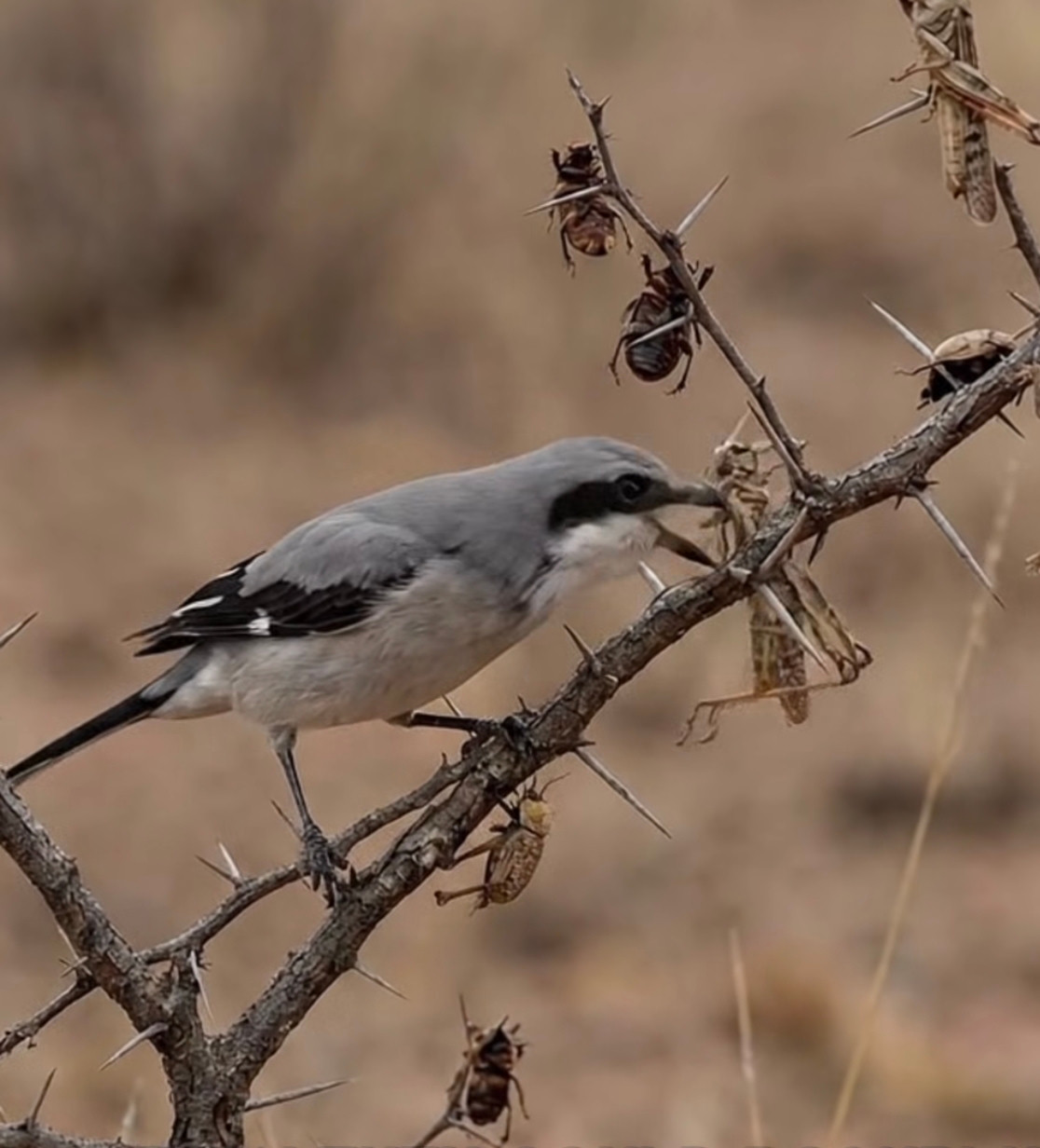
From a distance, it looks like an unassuming grey bird on a high branch. But that perch is a lookout. Its eyes follow movement on the ground, its hooked bill ready to strike at a large insect, a lizard or a small rodent. Once the prey is in its hands—or rather, between its bill and its feet—the thorns enter the story.
The thorn that stands in for a talon
The shrike belongs to the passerines, but lives as a predator. Without the powerful talons of birds of prey, it uses what its surroundings provide: a sharp thorn, barbed wire or a crevice between two branches. It secures its prey, then uses its bill to tear off pieces to eat.
The thorn becomes an extension of its natural equipment: it holds what is difficult to grip and helps the bird handle prey large in relation to its own size. Part of the prey may remain for another meal, or surplus catches may be impaled rather than eaten straight away.
This harsh-looking spectacle therefore serves several purposes: controlling food, making it easier to eat and keeping it for later. Insects and small vertebrates on branches within a shrike’s territory can look like an open record of its hunting success.
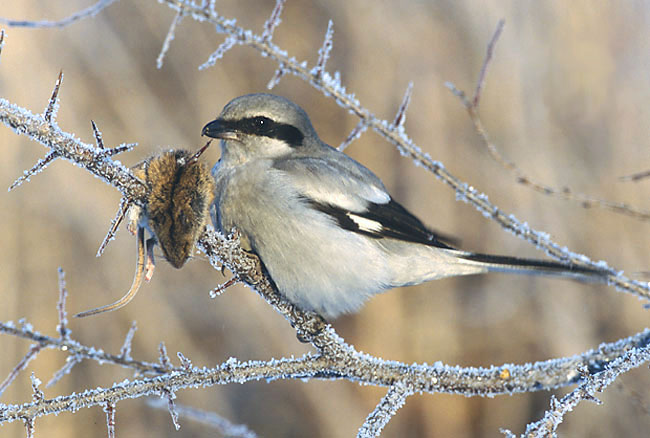
When a food store becomes an advertisement
Another detail makes the story more remarkable. In a study of Great Grey Shrikes in Poland, researchers found that males selected more conspicuous places to impale prey during the mating season. This suggests that their stores may also serve a social purpose: food that can be seen may carry a message to a potential mate or a rival.
It is an ingenious use of space. A shrub provides a lookout, a tool for securing prey, a food store and, sometimes, a display stand.
Among the shrikes that practise this behaviour, the Great Grey Shrike occurs across substantial parts of the Arab world. Some populations are resident in particular countries; others arrive on migration or in winter.
Identification
Arabic name: الصرد الرمادي الكبير. English name: Great Grey Shrike. French name: Pie-grièche grise. Scientific name: Lanius excubitor.
Family: Laniidae. Order: Passeriformes. Length: about 24–25 centimetres. Weight: around 48–81 grams according to The Birds of Saudi Arabia, with variation among populations.
Key features: a grey back, a black mask through the eye, a long tail, black-and-white wings, and a bill with a hooked tip. Food: large insects, lizards, rodents and small birds.
Global status: Least Concern, according to the global assessment cited in the references. This does not mean that its numbers cannot decline or that all its populations are equally abundant.
Where can it be seen in Arab countries? — The Maghreb
Local resident populations live in Morocco, Algeria and Tunisia, in northern habitats as well as deserts and oases. Libya also has resident populations. In suitable habitats, shrikes can therefore be encountered throughout the year, not only during a short passage season.
Their plumage varies in shades of grey and white. Some older references placed these birds under Southern Grey Shrike, but their classification has since changed. This article follows AviList 2026, which includes the relevant North African and Arabian populations, as well as Steppe Grey Shrike, within Great Grey Shrike Lanius excubitor.
Egypt
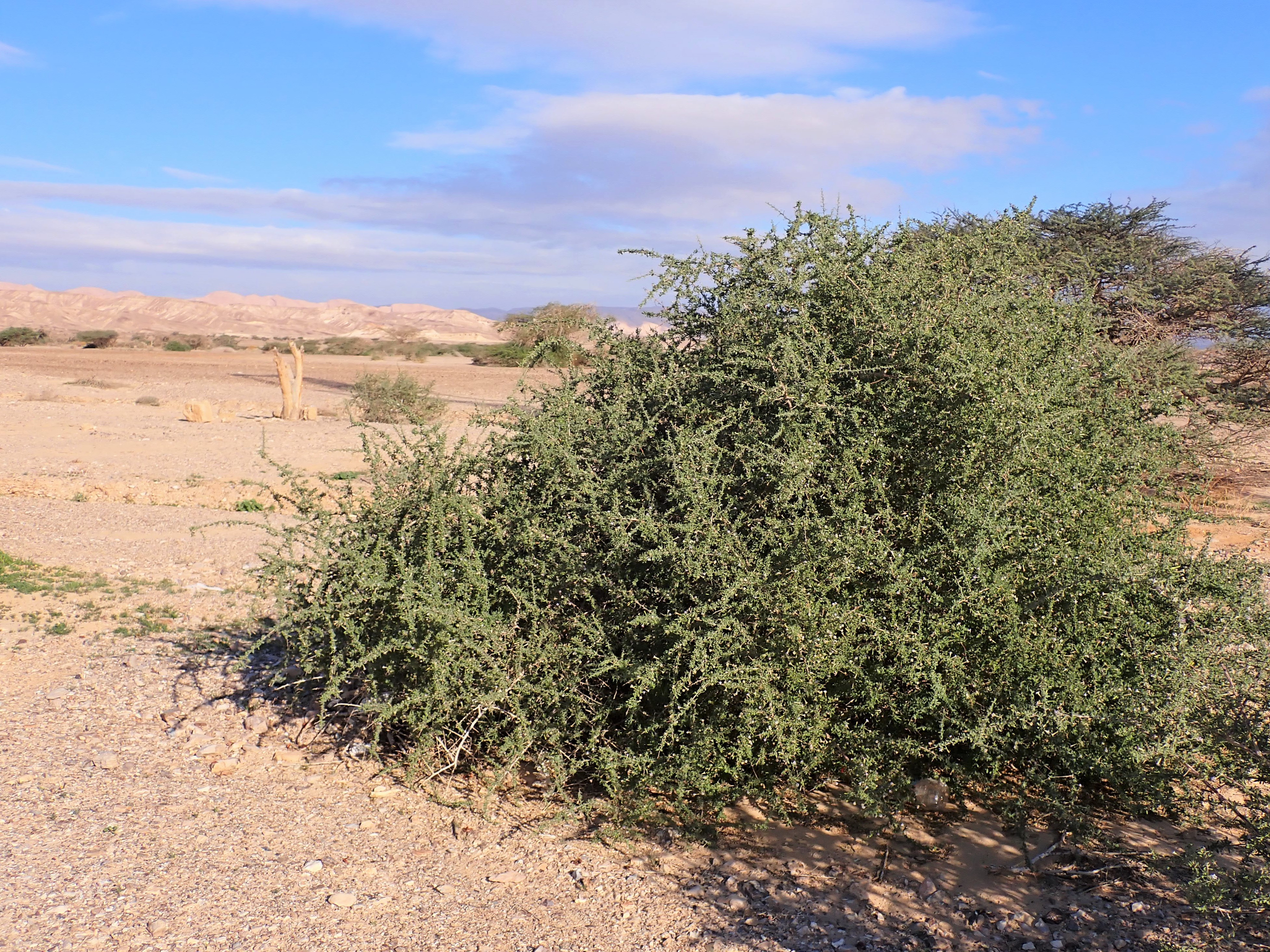
Resident breeding populations are documented, including at Gebel Elba and in the Red Sea mountains. In the Western Desert, shrikes have been recorded securing prey on boxthorn spines and barbed wire. The striking ‘gallows’ scene is not remote from our own landscapes.
Saudi Arabia and the Gulf
In Saudi Arabia, the Great Grey Shrike is a widespread resident breeder, with additional passage and wintering populations. The Birds of Saudi Arabia describes its use of acacia thorns to impale prey in the central and western parts of the country.
The United Arab Emirates, Qatar and Oman have resident breeding Arabian populations, joined by Steppe Grey Shrikes on passage or in winter. In the UAE specifically, autumn passage generally extends from August to October and spring passage from March to April, with some birds remaining over winter. Resident birds can be seen throughout the year.
Kuwait is different: its checklist treats Steppe Grey Shrike as an uncommon passage migrant and winter visitor, while the Arabian population resident in neighbouring countries is a vagrant. There is no single calendar of occurrence for the entire Gulf.
The Levant
In Jordan, Great Grey Shrike is listed as resident. Its status in Syria varies with population and region, from rare local breeding to winter visits and passage.
For Lebanon, the checklist published in 2020 records historical breeding, but found no conclusive recent evidence of it at the time of preparation. It documents scarce or rare passage in October to mid-November, and very rare passage from early March to early April. The bird should therefore not be presented as a common resident in Lebanon today.
Where to look in the field
Look for open country with scattered shrubs or trees: farmland, the edges of oases, semi-desert, or places with thorny vegetation and perches overlooking the ground. The first thing you notice is often its exposed position on a branch or wire, followed by the black mask and long tail.
It can resemble other grey shrikes. A clear photograph of the head, wings and tail, together with the location and date, helps identification. Differences in colour do not necessarily indicate a different species: age and local population also play a part.
Nest and family
The shrike builds a cup-shaped nest in a tree or shrub, using twigs, grasses and rootlets, and lining it with softer material. The female does most of the incubation, and both parents care for the young.
Saudi and Emirati references usually report 3–4 eggs, sometimes more. Incubation lasts about 15–17 days, and the young leave the nest after roughly two and a half weeks. Breeding timing varies geographically: March to May is prominent in the UAE, though activity may begin earlier.
Scattered shrubs and trees remain an important part of its habitat. Photographers and birdwatchers should leave impaled prey where it is, keep away from nests and avoid rearranging a scene for a picture.
You may leave while the mouse remains on its thorn. To a passer-by, it is a startling image; to the shrike, it is part of a way of life in which a small branch becomes a tool that gives it power beyond its size.
References: The Birds of Saudi Arabia, vol. 2, p. 252; Antczak, Hromada & Tryjanowski (2012), study of shrike impaling behaviour; Hegazi (1981), wild-bird food in the Egyptian Western Desert; Goodman & Abdel Mowla Atta (1987), The Birds of Southeastern Egypt; Ramadan-Jaradi et al. (2020), Lebanon bird checklist; Aidek et al. (2025), Syria bird checklist; Jordan BirdWatch and Kuwait bird lists; UAE national assessment; AviList v2026.
Third photograph: Marek Szczepanek / Wikimedia Commons, CC BY-SA 3.0. Pre-existing colour correction: MPF. · 1 · https://creativecommons.org/licenses/by-sa/3.0/