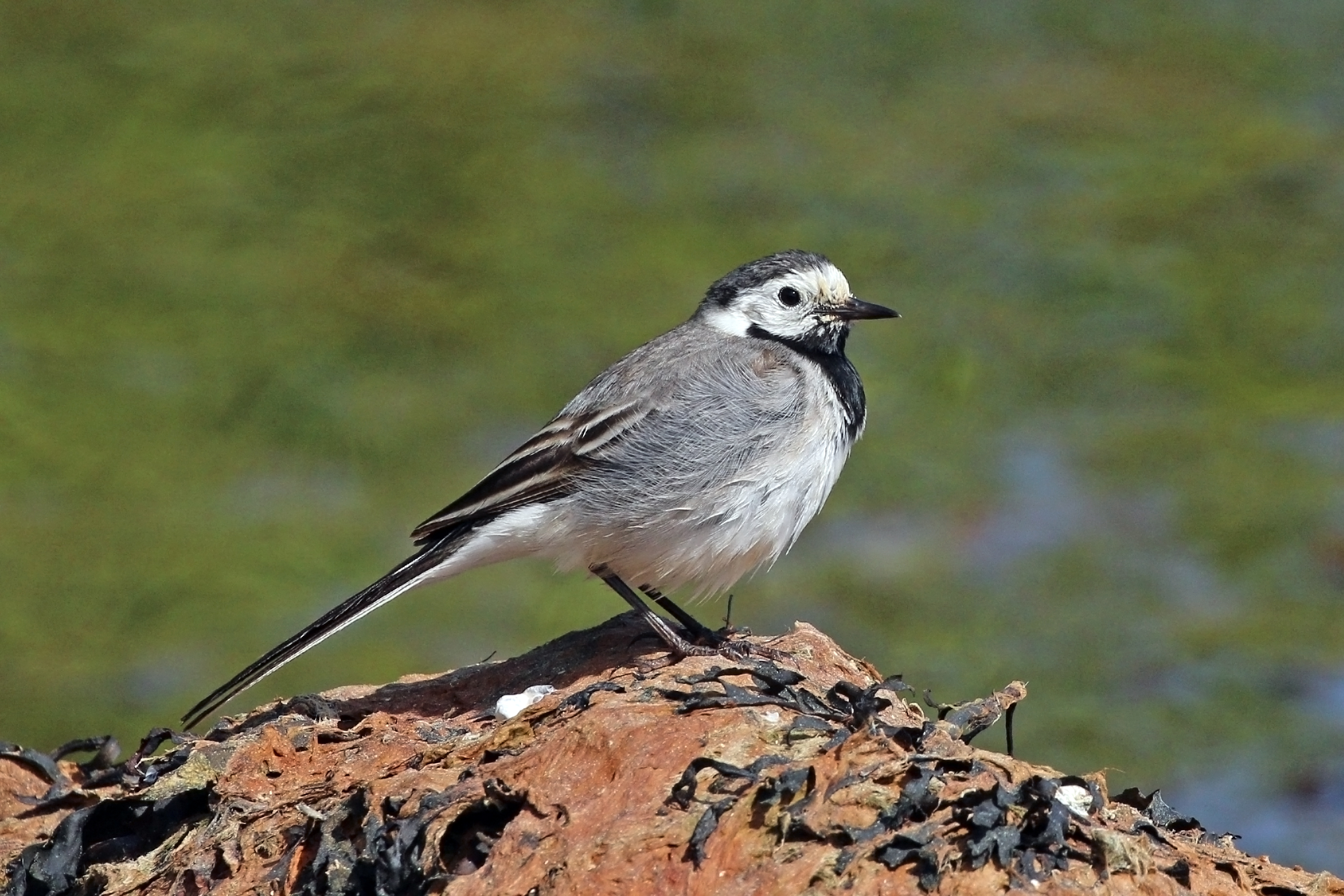
From riverbanks and lakeshores to fields and gardens, the White Wagtail draws attention with its long tail and constant movement. Its Arab-world range stretches from Morocco to Egypt, the Levant, Iraq and the Arabian Peninsula, with different patterns of occurrence: passage and wintering in many countries, and local breeding in parts of the range. October offers an opportunity to follow this seasonal presence, whose timing varies between countries.
Identification card
- Arabic name: الذعرة البيضاء
- English name: White Wagtail
- French name: Bergeronnette grise
- Scientific name: Motacilla alba
- Family: Motacillidae, the wagtails and pipits
- Length: approximately 18 centimetres, including the tail
- Arab-world occurrence: passage migrant and winter visitor across extensive areas, with local breeding populations, including the resident Moroccan subspecies
- Global conservation status: Least Concern (LC)
- Legal status: the relevant country’s laws and current decisions; global conservation status does not determine whether hunting is permitted
When movement provides the first clue
A White Wagtail may attract your attention before its colours become clear: quick steps, a short pause, then a long tail moving up and down. This is a useful starting point for identification, provided it is not your only clue. Look at its body shape, colour pattern and movements together; field identification improves when several features are considered rather than a fleeting impression alone.
It has a slender body. In the widespread alba subspecies, the back is grey, the underparts white, and parts of the head and breast black. White stands out on the face and along the sides of the dark tail, with white markings also visible on the wings. Its flight follows an undulating path, accompanied by clear, short calls that may alert you to the bird before you see it.
Its appearance changes with age and season. In winter plumage, the throat becomes white while a dark mark remains on the breast. Juveniles look duller, with some brownish-grey tones. A broad black breast patch, as shown in breeding-plumage photographs, should therefore not be a requirement before considering White Wagtail as a possibility.
Different patterns from Morocco to Oman
In Morocco, two patterns overlap: the Moroccan subspecies Motacilla alba subpersonata is a resident breeder, alongside birds arriving on passage and for winter. A wagtail seen there in autumn may therefore belong to the local population or be a seasonal visitor. Winter occurrence is also documented in Tunisia, including sites in the south.
Egypt is a country of regular passage and wintering, with field studies documenting the species in the Nile Delta’s agricultural habitats. Farther east, the 2026 Birds of Lebanon guide describes White Wagtail as a common passage migrant and winter visitor, and as a relatively scarce migrant breeder. Regional references also record breeding in northern Iraq. These differences matter: finding a bird in an Arab country during winter does not establish that it breeds there.
In the Arabian Peninsula, Saudi surveys confirm winter occurrence, while the Oman Bird List describes it as abundant on passage and in winter. In the UAE, white-faced birds are very common passage migrants and winter visitors from mid-September, mainly October, to April.
White Wagtail abundance also varies within a country according to habitat and season; birds may be numerous at one site and absent from another.
Interpreting an October sighting
October falls within the White Wagtail’s season of occurrence in many parts of the Arab world, but there is no single arrival date that applies throughout. For Egypt, a study published in 2019 places passage and winter occurrence between late September and early May. Lebanon’s passage-and-winter window is wider, from late August to late May, while Morocco’s resident birds must be distinguished from seasonal visitors.
An October record should therefore be read with its country, site and date. The wagtail may be passing through, settling for the winter, or a local bird where breeding occurs. One observation cannot reliably distinguish these possibilities; repeated visits and comparison with a local guide are useful.
Where to look, and what might cause confusion?
White Wagtails use open spaces with short grass or bare ground, including watersides, fields, gardens and areas near buildings. They can appear in places people use every day. An open patch near water is therefore worth a few minutes of quiet watching, without entering private property or approaching sensitive locations.
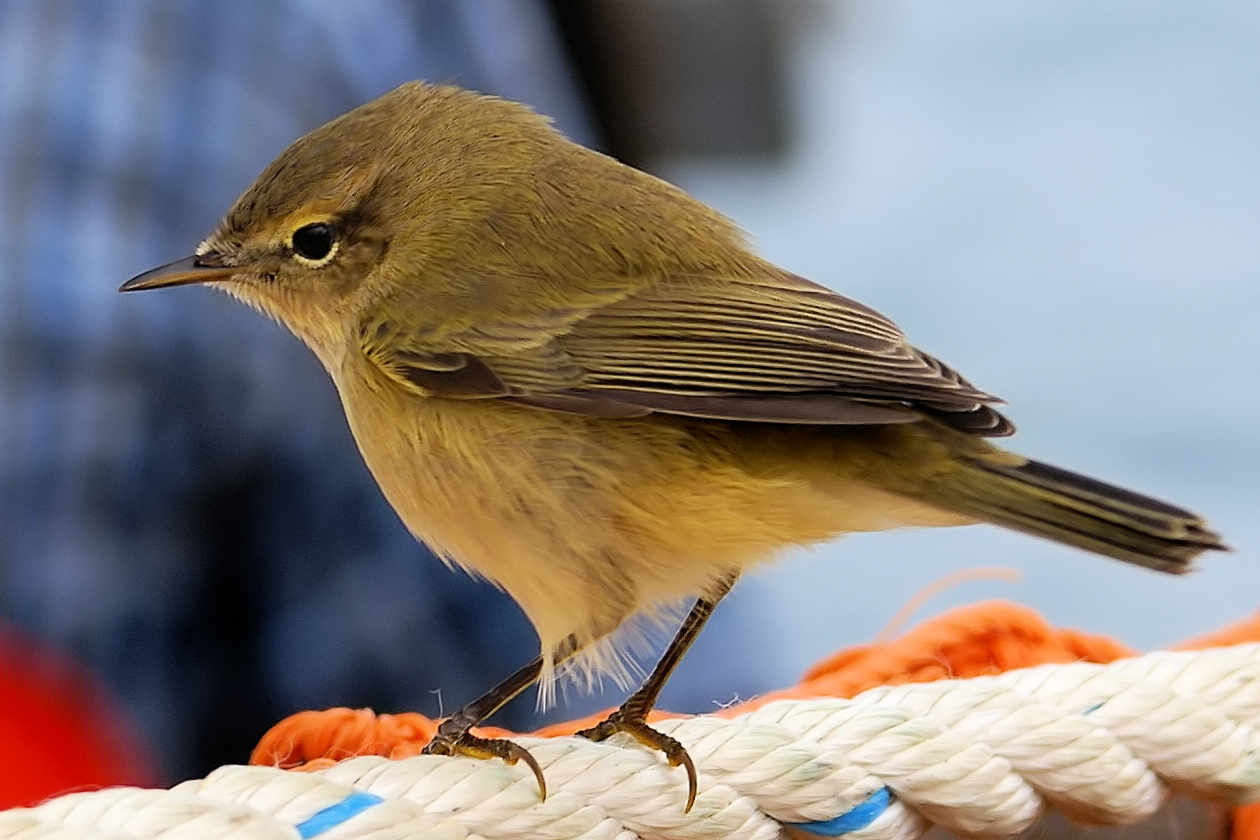
Watch for confusion with Grey Wagtail, Motacilla cinerea, which shows conspicuous yellow beneath its tail despite its name. Yellow colouring can also cause confusion with Yellow Wagtail and closely related species. Do not let a single colour settle the identification, particularly in young birds. Compare the head, breast and tail, and consult a clear photograph or a reliable guide when uncertain.
Small prey and a place in the food web
Its diet consists mainly of insects and spiders. It picks up prey while walking, makes short dashes after it, and may snatch an insect during a brief flight. Food includes flies, beetles and larvae, including prey associated with water. This diet illustrates its connection to conditions on the ground and along the water’s edge, where its food resources occur.
From a habitat-conservation perspective, keeping shores clean and reducing pollution and disturbance benefit the places where birds feed. The presence of one wagtail is not enough to establish water quality scientifically, nor does it allow an estimate of the species’ numbers across an entire area. Its first value is as an observation that can be documented and contribute to systematic monitoring.
A wide range and cavity nesting
Its Arab-world occurrence is part of a wider range extending across most of Europe and large parts of Asia, with breeding in parts of North Africa and at the margins in Greenland and western Alaska. Migration patterns differ between populations. Geographical forms also vary within the species, so head markings in a Moroccan photograph may differ from those of a wintering bird in the Gulf.
It builds its nest in a sheltered place, such as a wall crevice, a cavity or a suitable space in a building. A clutch usually contains four to six eggs. Incubation takes about two weeks, followed by a similar period for the chicks in the nest, and both parents feed them. The nesting season varies by region and population.
Global conservation and responsible observation
The White Wagtail is classified globally as Least Concern (LC). This assesses extinction risk at species level and does not necessarily describe the condition of every local population. Protecting feeding and nesting places and reducing pollution and disturbance remain important even for a widespread bird.
Whether hunting is permitted cannot be inferred from that category. To establish the legal position, consult the relevant country’s laws and decisions in force on the date of the activity, including provisions concerning species, seasons and protected areas. A hunting rule or exception in one country cannot be applied to another.
For responsible observation, record the date, place and approximate number, with a photograph showing the identifying features, and let the bird continue feeding. Avoid chasing it for a closer shot. The simple sight of a tail wagging on an autumn shore deserves to be recorded as it is, accurately and quietly.
Photo credit: Charles J. Sharp — Wikimedia Commons — CC BY-SA 4.0.
.jpg)