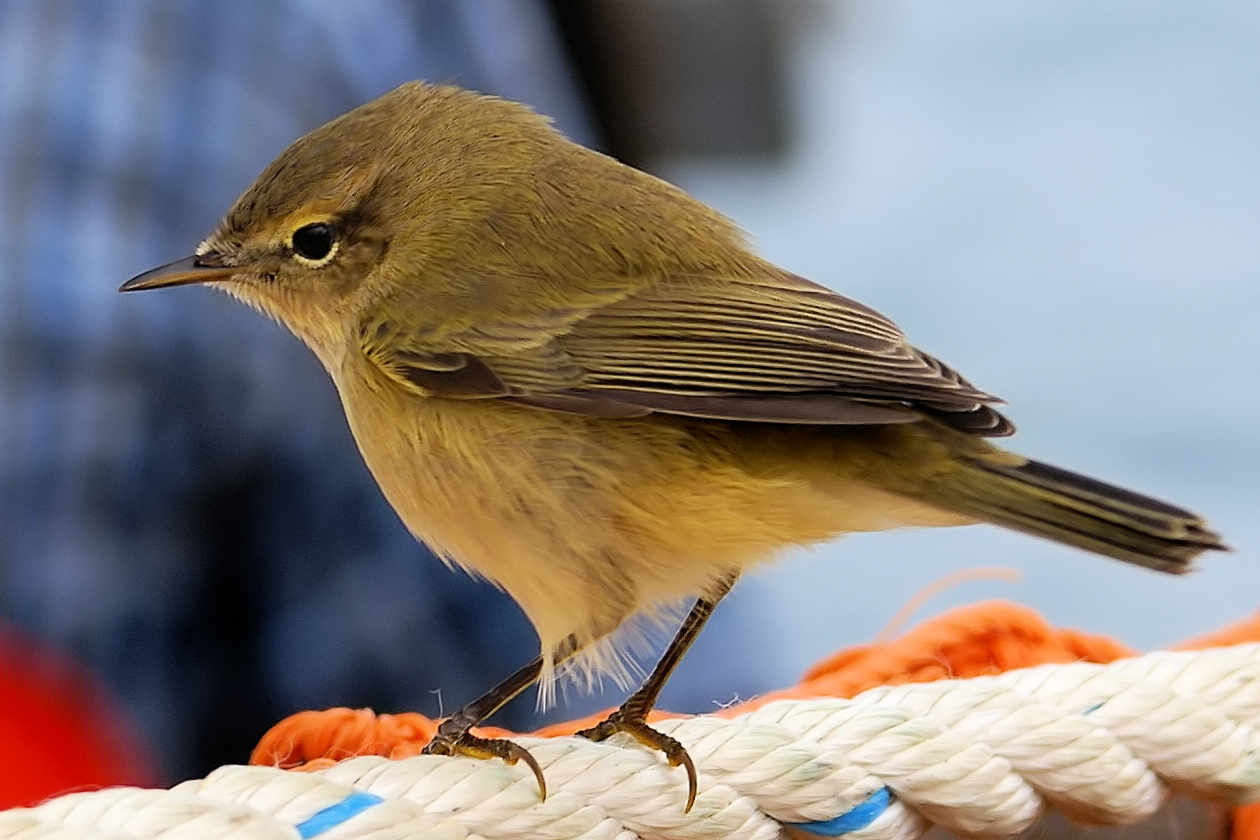
From the Maghreb to Egypt, the Levant and the Arabian Peninsula, the Common Chiffchaff occurs on migration and in winter, with breeding documented in some areas. This small bird reveals how migration calendars differ, and identifying it requires attention to detail rather than a search for striking colours.
Identification card
- Arabic names: الشفشافة الشائعة and النقشارة الشائعة
- English name: Common Chiffchaff
- French name: Pouillot véloce
- Scientific name: Phylloscopus collybita
- Family: Phylloscopidae, the leaf-warblers
- Type: a small passerine feeding mainly on invertebrates
- Arab-world range: examples include Morocco, Algeria, Tunisia, Egypt, Palestine, Lebanon, Saudi Arabia, the United Arab Emirates and Oman; occurrence varies by country, habitat and season
- Approximate measurements: length 11 centimetres; wingspan 18 centimetres; weight 8 grams
- Seasonal status in the region: passage migrant and winter visitor across extensive areas, with summer breeding documented locally, including in Lebanon
- Global conservation status: Least Concern (LC)
- Hunting law: check each country’s current laws and decisions; the global conservation category is not a hunting permit
In October, a slight movement inside a shrub or among garden branches deserves a second look. The Common Chiffchaff is one of those birds that may pass a watcher without attracting attention through its colours. Its body is small and its plumage echoes the shades of leaves and shadows, but anyone patient enough to follow it can learn to read a bird through its movements, shape and voice together. In the Arab world, an autumn sighting may mark the beginning of a winter stay or a stop along a migration route; the month alone cannot reveal the bird’s destination or origin.
How can we identify it?
The upperparts are predominantly olive-brown, while the underparts look pale and may show a yellowish wash. A rather subdued pale eyebrow runs above the eye, and the legs are usually dark. Chiffchaffs move actively among branches, with a repeated tail movement that helps draw attention to them. Males and females look alike, so plumage colour alone cannot determine the bird’s sex.
The most notable confusion species is the Willow Warbler, Phylloscopus trochilus. The chiffchaff has relatively shorter wings, and the tips of its flight feathers usually project a shorter distance beyond the tertials on the folded wing. Leg colour is a useful clue, but it is not a decisive test on its own. It is better to combine several features and record what was clearly seen rather than fill in details by guessing. If doubt remains, a clear side-on photograph and a note of the voice can help with a later identification review.
The chiffchaff is famous for a repeated, rhythmic song echoed by its English name, but an autumn watcher should not rely on hearing that song. The bird may give short calls or remain silent. Distinguishing calls from song, while examining the wing and face, makes an observation more accurate.
Distribution across the Arab world
The Maghreb forms part of this species’ passage and wintering range. In Morocco, a field study published in 2024 on two High Atlas valleys lists it as a passage migrant and winter visitor. In Algeria, a study of the Algiers Sahel published that same year records it as a wintering bird. In Tunisia, a study of Dyr El Kef published in 2025 likewise lists wintering and passage status.
The chiffchaff’s presence extends eastwards to Egypt and the Levant. In Egypt, an environmental study in the Nile Delta region records passage and wintering status. In Palestine, it is known as a common migrant and winter visitor. Lebanon adds a different situation: alongside passage and wintering, its 2026 bird guide confirms summer breeding. A single country may therefore hold breeding birds, passage migrants and winter visitors, with different periods of arrival and residence.
On the Arabian Peninsula, Saudi references describe the chiffchaff as a widespread passage migrant and winter visitor, including in the southwestern highlands, and do not record it breeding in the Kingdom. In Oman, too, it is listed as a passage migrant and winter visitor.
What does its presence in October mean?
Ringing and recovery data brought together by the Eurasian-African Bird Migration Atlas show autumn movements towards North Africa and the Near East, with arrivals appearing in October and more records in November. In the UAE, the February 2026 checklist describes a very common migrant and winter visitor from late October to early April.
October should therefore not be treated as a single arrival date across the Arab world. Passage may already be underway at one site while the usual winter season starts later at another. A watcher can be more accurate by linking an observation to its place and date, then comparing it with local records.
Habitats and food
Chiffchaffs inhabit a variety of wooded and shrubby settings, from forests and their edges to gardens, orchards and vegetation near wetlands. Suitable habitat combines opportunities to find food with branches, leaves and shrubs that provide cover. Small green spaces can therefore be worth watching alongside larger natural habitats.
They pick off insects and their larvae, spiders and other small invertebrates, and can catch some prey in flight. This diet places them within the web of relationships linking plants, invertebrates and birds. Watching them search among leaves makes the role of a shrub or green margin clearer: it provides both food and cover. This highlights the importance of maintaining a diversity of native plants and limiting the use of pesticides that reduce the resources available to insect-eating birds.
From the nest to autumn migration
The species breeds across extensive parts of Europe and Asia, and many populations head south during the cold season. The female builds a domed nest close to the ground or low down in dense vegetation. A clutch usually contains five or six eggs, and incubation lasts around 13–14 days.
Autumn offers an opportunity to watch the bird searching for food away from the nest. It is best to stay on paths, allow it to approach as part of its natural movements, and avoid chasing it through shrubs for a photograph. Recording the date, location, habitat and behaviour can make a brief sighting more useful, even if the bird’s identity remains uncertain.
Conservation and legal status
Globally, the Common Chiffchaff is classified as Least Concern (LC). This assesses the species’ extinction risk worldwide; it does not guarantee the health of every local population. Protecting woodland, shrubs and wetland margins, and reducing pesticide use and disturbance, remain useful ways to safeguard the places where the bird finds food and cover.
There is no single hunting rule that can be attributed to the entire Arab world. Determining the legal position requires identifying the country and checking the legislation and decisions in force on the date of the activity, including rules for protected areas, seasons and permitted species. An LC category does not make hunting permissible. Watching this small movement among the leaves and recording it without chasing or disturbing the bird can deepen our understanding of the nature shared by the region’s countries.
Photo credit: © Hans Hillewaert — Wikimedia Commons — CC BY-SA 4.0.
.jpg)