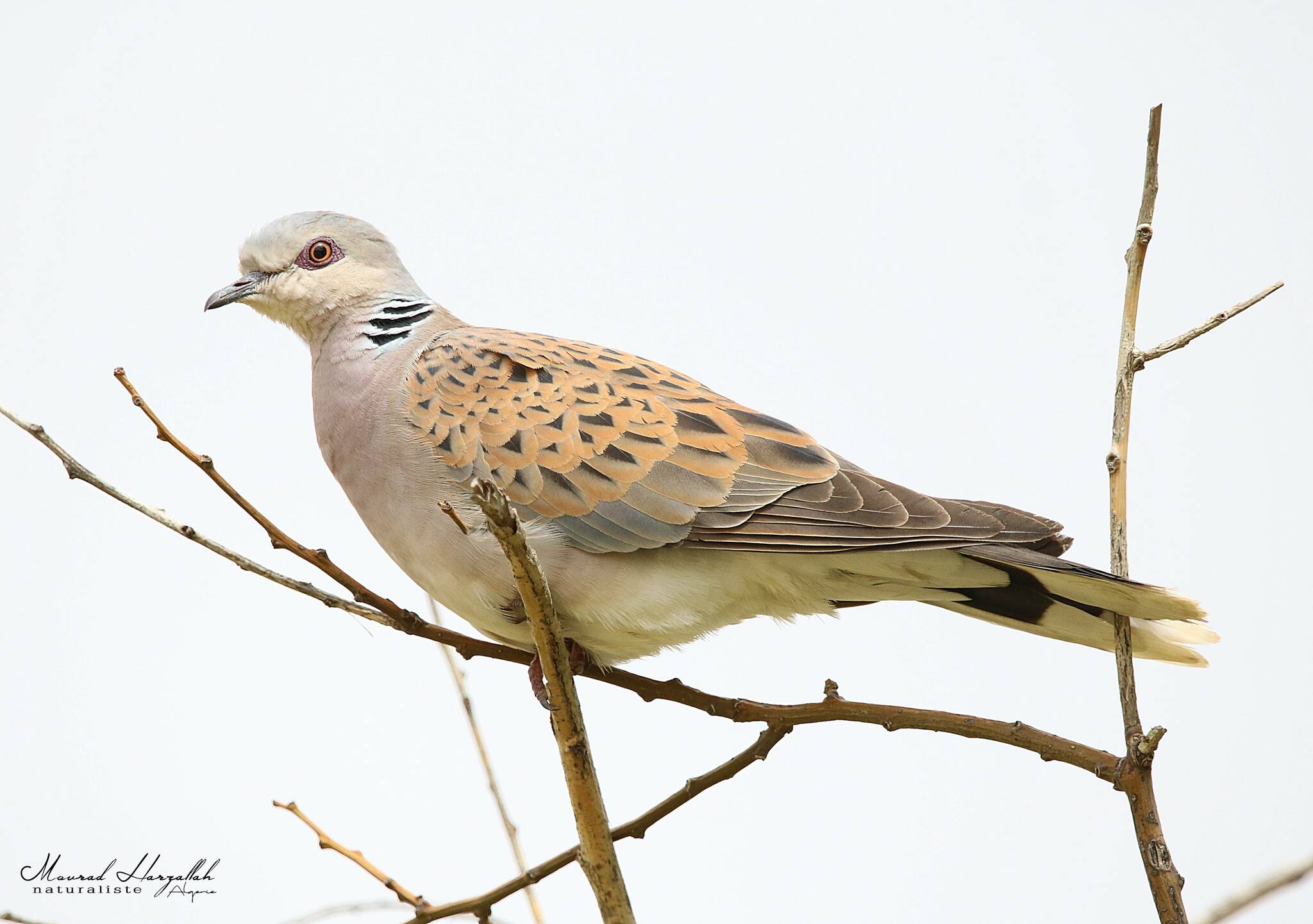
European countries have cut Turtle Dove hunting by about 90% across the two main flyways they manage. Yet the bird's breeding population has followed different paths: growth in the west, and a continued decline with signs of stabilisation in the central and eastern flyway. What does that divergence tell us about managing a bird whose journey crosses borders?
A July 2026 report from the European Federation for Hunting and Conservation (FACE) paints a mixed picture for the European Turtle Dove (Streptopelia turtur). The population breeding on the western flyway has continued to increase: its spring 2025 index was the highest since 2009. On the central and eastern flyway, the long-term trend is still downward, though the index has shown signs of stabilising since 2021.
Hunting has fallen by about 90% on both flyways compared with the respective baselines used by the management programme. In 2025, western flyway countries reopened hunting under small quotas after a four-year moratorium; quotas on the central and eastern flyway remained low. Countries require hunters to report their take, with several using digital systems to track quotas.
FACE argues that the continuing decline in the central and eastern flyway, despite the large reduction in hunting, warrants closer study of other pressures, especially the habitats Turtle Doves need to breed and feed. This finding does not mean hunting has no effect. It means reducing it alone has not yet produced a recovery comparable to the one observed in the west.
Where do Arab countries enter the story?
The bird's migration extends beyond the European scope of the FACE report. The western route crosses the Iberian Peninsula, Morocco and Mauritania towards Africa. Other routes pass through Italy, Malta and Tunisia, or through Greece, Egypt and the Levant, including Lebanon. Breeding grounds in Europe, stopover sites and wintering grounds in Africa are therefore parts of the same story.
For Arab hunters, the report points to a practical question: how many Turtle Doves pass through each season, how many are hunted, and what is changing in farmland and resting habitats? The European experience demonstrates the value of regular counts, trackable quotas and measuring the results of management decisions year by year. Assessing the species in our countries requires local data and cooperation among the countries on its routes.
Sources: FACE Turtle Dove Report 2026; Bird Migration Atlas; International Single Species Action Plan.
_in_Algeria.jpg)