_cropped.jpg)
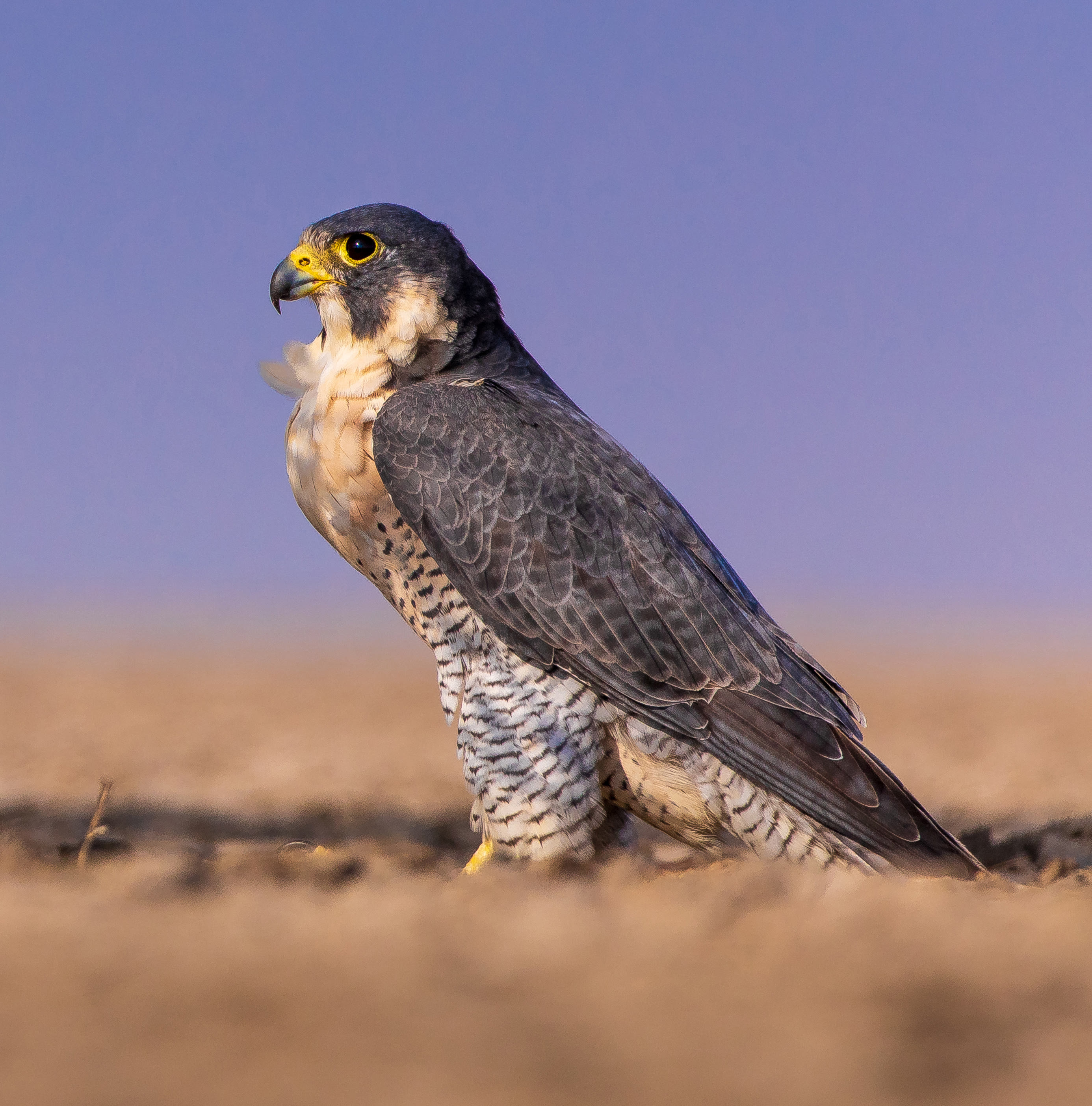
Range: One of the most widespread birds in the world: found on every continent except Antarctica. In Lebanon it is recorded year-round, and it is also among the raptors that pass with migration routes over the country.
Life cycle and habitat: It nests on rock cliffs, and has often taken skyscrapers and bridges as nest sites in cities. It hunts medium-sized birds in the air: watching from a height or soaring, then stooping toward the prey in a rapid dive. It usually kills with a bite to the neck after the strike or the seize.
Lifestyle: A flying hunter specialized in taking birds. Ordinary flight speed, according to the Cornell Lab, is about 40–55 km/h, and in a direct chase it may reach about 112 km/h. In a dive from great height, stoop speed may approach about 320 km/h (around 200 mph)—which is why it is counted among the fastest creatures on Earth in a dive. Its Latin name, Falco peregrinus, points to the “wanderer”: many individuals migrate long distances, and some nest sites have remained in use for successive generations.
Hunting status: Across Arab countries the peregrine is treated as a protected bird of prey; hunting it as quarry is generally prohibited. In Lebanon, Wild Hunting Law No. 580/2004 limits hunting to quarry species set by the minister; everything else—including all birds of prey—is protected year-round and may not be hunted; the peregrine is not among the permitted quarry. Despite legal protection, it still faces illegal shooting in some seasons and along some flyways.
Conservation status: Globally Least Concern with the International Union for Conservation of Nature. Its numbers collapsed in the mid-twentieth century because of pesticides such as DDT, then recovered after bans and captive-breeding and release programs; in the United States it was removed from the threatened-species list in 1999.
Traits: Falconers have prized it among the finest hunting birds for more than a thousand years, and their techniques later helped breed it in captivity to rescue collapsed populations. The oldest ringed peregrine known lived more than 19 years. Today it is seen over coasts, cities, and cliffs alike.