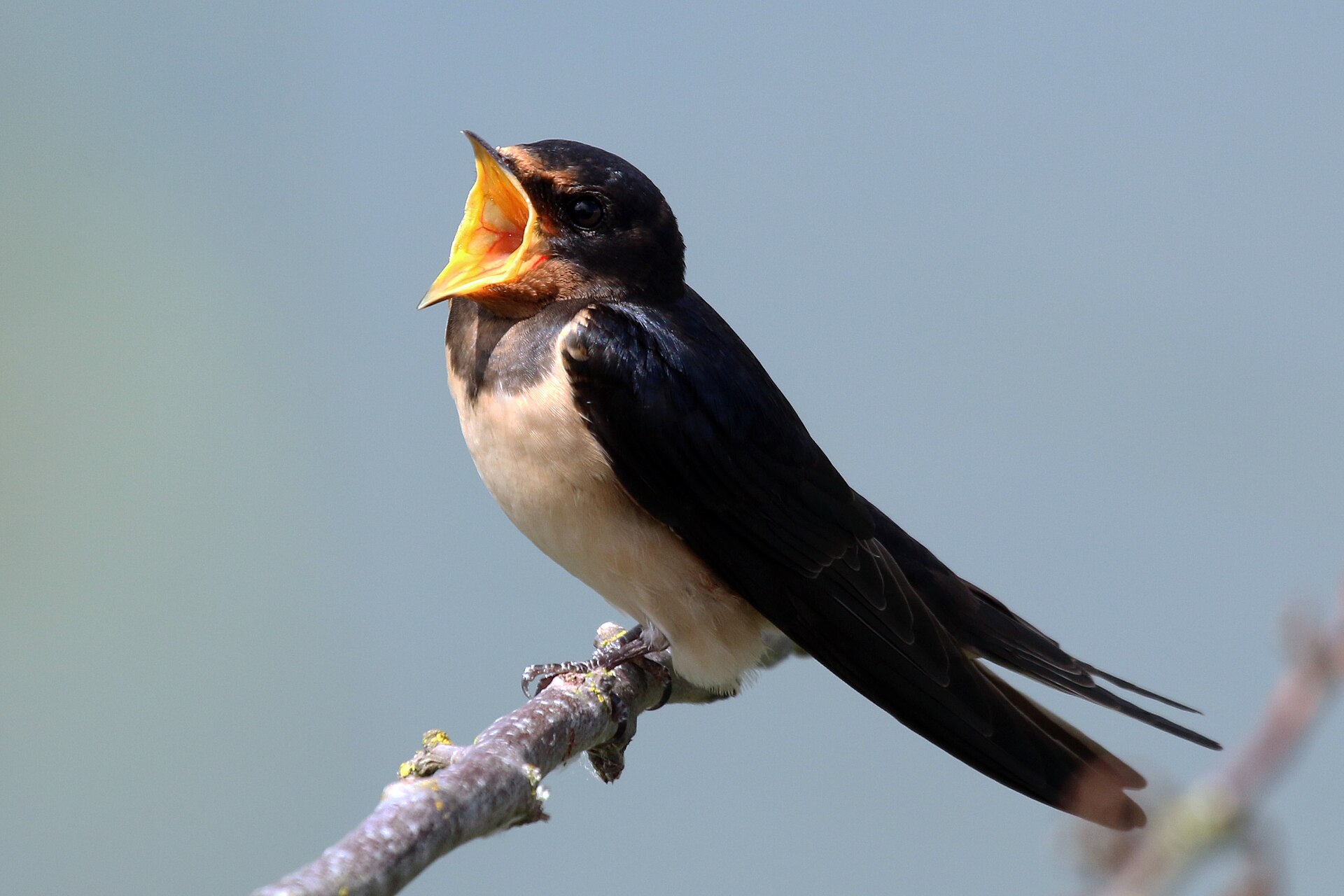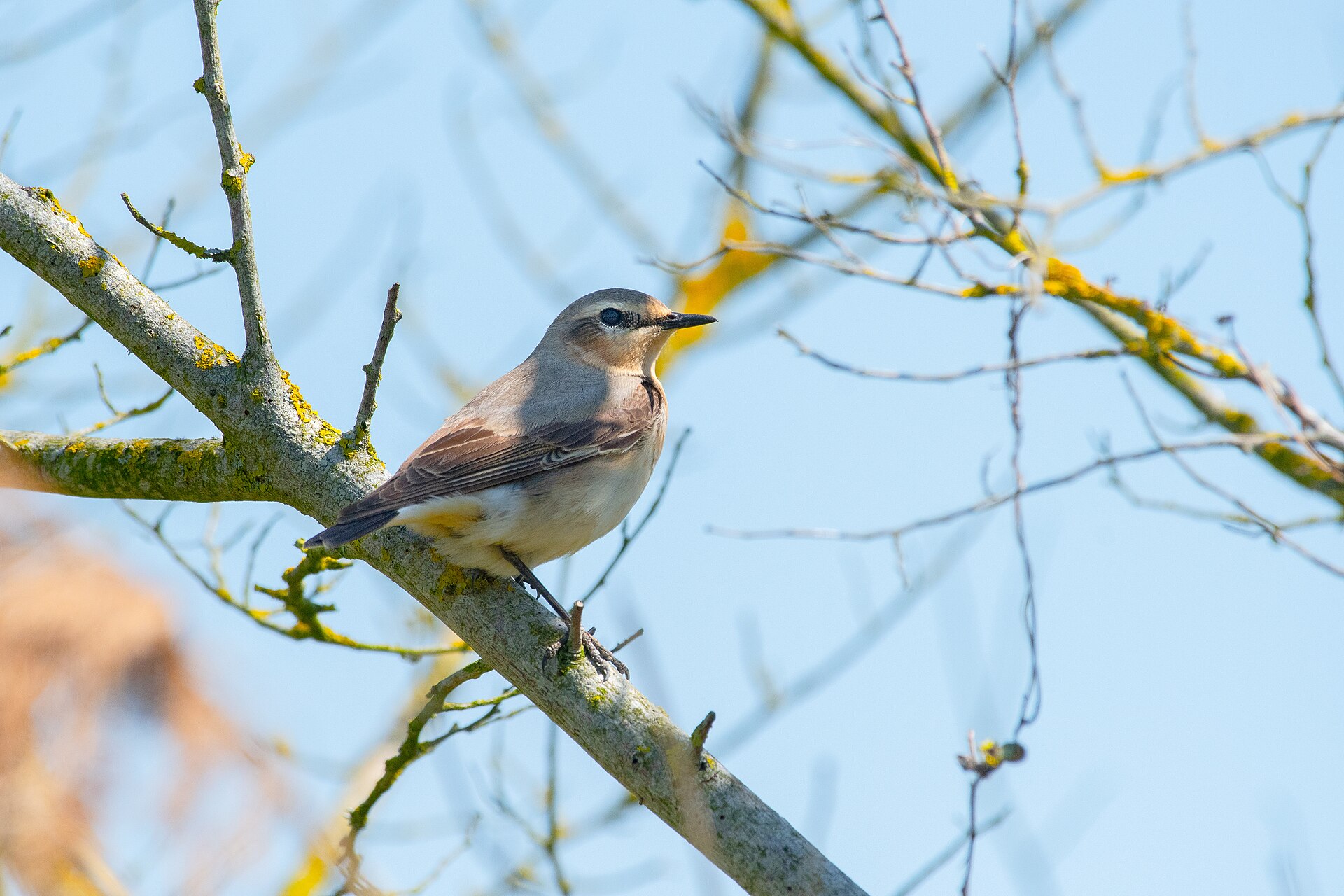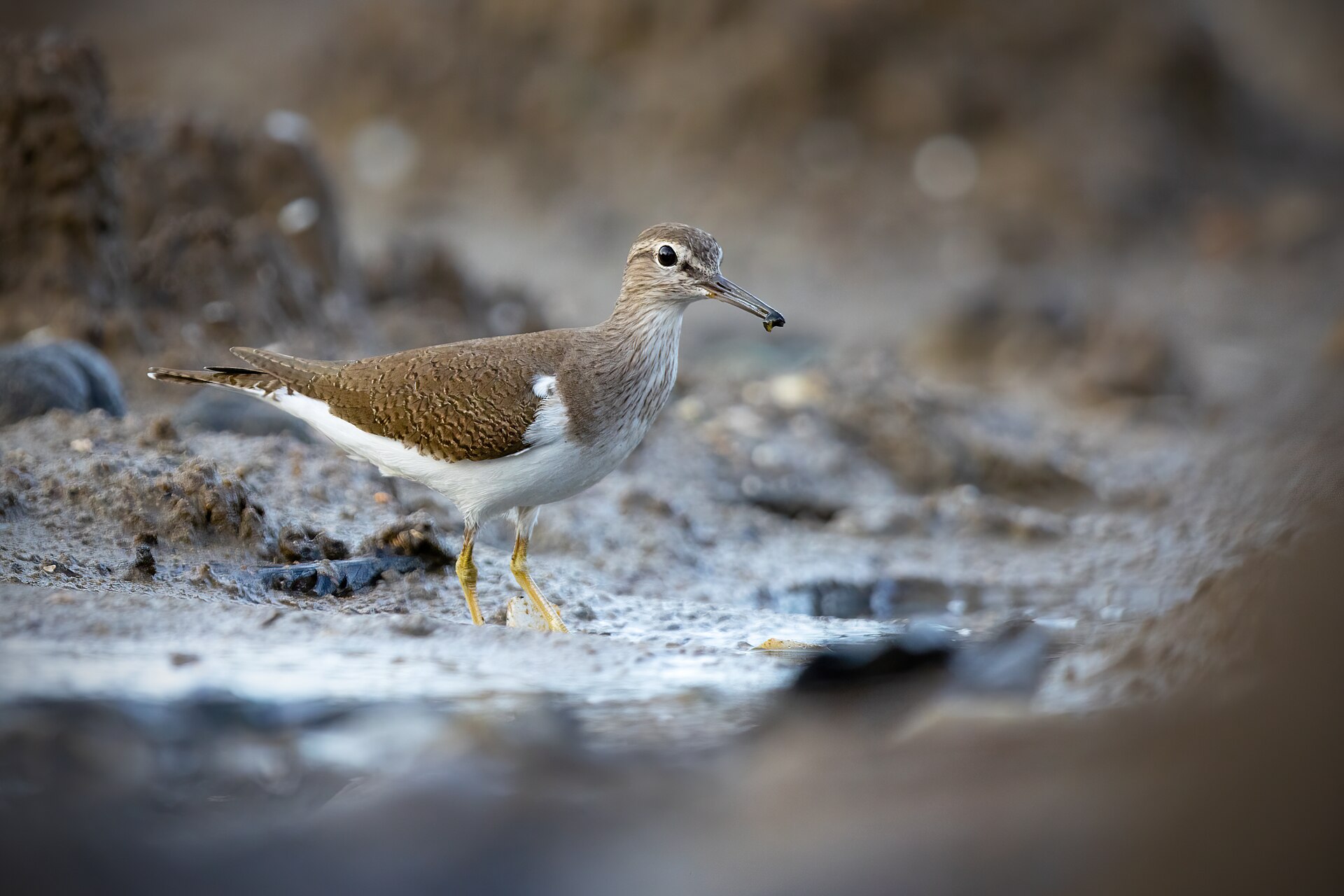
On a riverside stone or the edge of a pond, a brown-and-white bird takes short steps and teeters before continuing to feed. It may look solitary, well away from large wader flocks. Yet the Common Sandpiper belongs to a broad network of waterways and migration stopovers stretching across the Arab world.
Identification card
- Arabic names: الطيطوي الشائع; الطيطوي الاعتيادي
- English name: Common Sandpiper
- French name: Chevalier guignette
- Scientific name: Actitis hypoleucos
- Family: Scolopacidae
- Length: approximately 19–21 cm
- Habitat: freshwater and saltwater margins, muddy and rocky banks, lakeshores and canals
- Arab-world occurrence: passage migrant and winter visitor in varying numbers; a summer sighting alone does not establish breeding
- Global conservation status: Least Concern (LC)
Where it occurs in the Arab world
National studies in Morocco document wintering birds on both Atlantic and Mediterranean coasts and at inland waters. Tracking of some Scottish breeders has also revealed Moroccan staging sites on journeys to and from West Africa. The country can therefore serve two different purposes: a stopover for some individuals and a wintering area for others.
In Lebanon, a wader study published in the Lebanese Science Journal describes a common passage migrant and scarce winter visitor, recorded throughout the year at inland waters, along the coast and on islands. Year-round records do not establish nesting at all those sites: non-breeding birds may remain away from breeding areas.
In Saudi Arabia, Common Sandpipers occur on passage and in winter, including inland. Observations also show variation within the country: passage is prominent in the Eastern Province, while smaller numbers winter along its coast and pools. A waterbird is not necessarily confined to the sea or to large marshes.
A migration that starts before autumn feels close
Post-breeding movement in European populations begins in July, with adults generally preceding juveniles. Many birds reach African wintering areas by October. Riyadh-region records place the main autumn passage between July and late October, with spring movement from March to May. Timing and numbers vary by site, population and year.
The first birds may consequently appear in late summer, before the weather suggests autumn. Repeated sightings of one sandpiper do not prove that the same individual has remained: different birds may use the same suitable patch. Dates, counts and behaviour help turn impressions into seasonal observations that can be compared.
A white wedge in front of the wing
Grey-brown upperparts contrast with a white belly and a white projection rising between the side of the breast and the folded wing. This is particularly useful when comparing it with Green or Wood Sandpipers, which lack the same white shoulder wedge. Its tail extends beyond the folded wings, and the legs look short beside those of many other waders.
A white wing-bar shows in flight, often low over water with distinctive flicking wingbeats. There is no reason to flush the bird to see it. Head-bobbing and teetering are frequent while it walks, and may intensify when a person approaches. If it stops feeding and continually watches you, step back.
The sexes look similar overall. Feather-edge details differ between juveniles and adults, but ageing requires a clear view and assessable plumage. The strength of a brown tone, or apparent size in an unscaled photograph, cannot establish age or sex confidently.
What the bank provides
It feeds on aquatic and terrestrial insects and larvae, worms, small crustaceans and molluscs, picking food from the ground and water's edge. It may use a canal bank or small pond that people barely notice. The value lies in food, water and accessible margins, rather than the size or fame of the landscape.
It breeds mainly across Europe and Asia, placing the nest near water in concealing vegetation. BTO data give a typical clutch of four eggs, incubated by both sexes. These are facts about the species' biology, not evidence of breeding at an Arab site without a documented nest or confirmed breeding behaviour.
Keeping quiet margins available
The global category remains Least Concern, but feeding and resting sites matter to successful migration. Loss or pollution of natural banks, and repeated disturbance, can reduce the usefulness of a place that looks small on a map.
Watch from a distance. Avoid walking directly towards the bird along a narrow bank or trapping it between yourself and the water. Do not catch it for identification. Check legal status with the competent authority in each country: neither its name nor its conservation category authorises hunting. A clear side-on photograph with a date and location is more useful than a flight image obtained by disturbance.
References
- EURING/CMS — Common Sandpiper migration atlas
- Cornell Lab — Common Sandpiper identification
- Australian Museum — Common Sandpiper
- BTO — Common Sandpiper biology and status
- New Zealand Birds Online — Common Sandpiper
- Lebanese Science Journal — waders of Lebanon (2020)
- Les Limicoles du Maroc — national wintering synthesis
- Birds of Saudi Arabia — Common Sandpiper passage and winter records
- HANZAB — Common Sandpiper plumages
Photo credit: JJ Harrison — Wikimedia Commons — CC BY-SA 4.0.