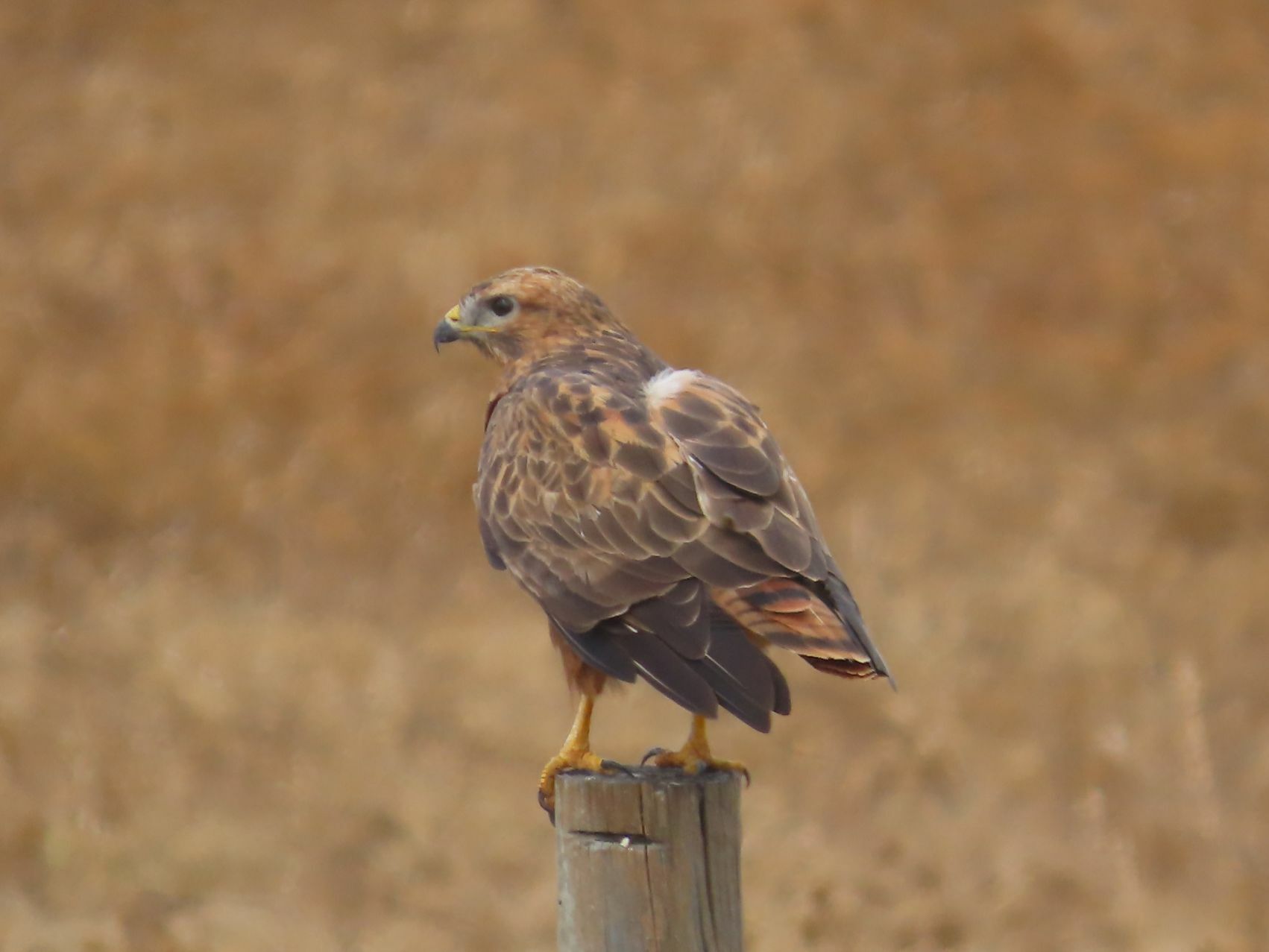
Buteo buteo — A broad-winged raptor with variable plumage, soaring over open country and migrating through the Levant
Identity and recognition
The Common Buzzard, Buteo buteo, is a diurnal raptor of the family Accipitridae. Arabic references also call it al-bazi al-hawwam. Broad wings, a relatively short tail and a substantial body characterize its shape. Individuals range from dark brown to extensively pale plumage, and often soar with their wings in a shallow V. AviList 2026 retains the Steppe Buzzard, Buteo buteo vulpinus, as a subspecies within this species. It is an important migrant through the Levant. Different populations are resident or migrate over varying distances.
Age, sex and similar species
The sexes look broadly similar, and overall colour alone is unreliable for separating them. Adults generally show a distinct dark terminal tail band and dark trailing edges to the wings; ageing requires several feather characters and their condition. Long-legged Buzzards, Buteo rufinus, differ in structure, proportions and plumage details, but colour overlap can confuse observers. European Honey Buzzards, Pernis apivorus, have a smaller, more projecting head and a relatively longer tail. Views of both wings and tail from several angles improve identification, particularly in mixed gatherings of migrating raptors.
Habitat, food and behaviour
Open land, pasture and fields adjoining trees or woodland provide suitable habitat. A buzzard may watch the ground from a post or tree, or soar in rising air before descending on prey. Its flexible diet includes rodents and other small mammals, birds, reptiles and invertebrates, as well as carrion. Birds sometimes walk across fields looking for earthworms. Their needs combine accessible feeding ground with elevated resting or nesting sites, explaining frequent appearances beside roads and fields even though cities are not their principal habitat.
Breeding and life cycle
Buzzards build stick nests within their breeding range, and raising young requires weeks of parental care. British nest records typically indicate one brood of two or three eggs. Incubation lasts approximately 34 days and is mainly performed by the female, sometimes with male participation; young usually fledge at around 44–52 days. These are reference values from British monitoring, with breeding dates varying by population and region. Migratory populations complete their annual cycle between northern nesting areas, passage corridors and southern wintering grounds.
Arab-region distribution and seasonality
Lebanon’s 2020 checklist describes autumn passage from early August to November and regular wintering by the nominate subspecies from November to mid-March, especially in the Beqaa. Vulpinus passes in larger numbers and winters less regularly. Jordan records common passage by Steppe Buzzards and winter occurrence of the nominate form. Saudi references describe autumn migration particularly in the west during September and October, with limited winter presence in southern Tihama. Egypt includes important Red Sea corridors for Steppe Buzzards; research at Galala Observatory documents the significance of spring passage there. Late October consequently falls near the end of passage and approaching winter residence in parts of the Levant.
Ecology and conservation
Buzzards consume rodents and other animals; scavenging also returns material to food webs. AviList 2026 lists global Least Concern using Red List data. Local hazards include shooting, poisoning and loss of feeding or nesting sites. Safe migration corridors are particularly important where many raptors concentrate, while monitoring winter sites helps distinguish temporarily settled birds from passing migrants.
References
AviList Core Team — The Global Avian Checklist, v2026
RSPB — Buzzard
British Trust for Ornithology — BirdFacts: Buzzard
Ramadan-Jaradi and colleagues — Updated checklist of the birds of Lebanon, Sandgrouse 42 (2020)
Jordan BirdWatch — Jordan Bird List (2020)
Boland and Al-Suhaibany — The Birds of Saudi Arabia (2020), species account reproduced by KSA Nature
Nature Conservation Egypt — Globally important proportions of six raptor populations migrate past Galala Bird Observatory, Egypt, in spring
Photo: Andrew Deacon — CC0-1.0.