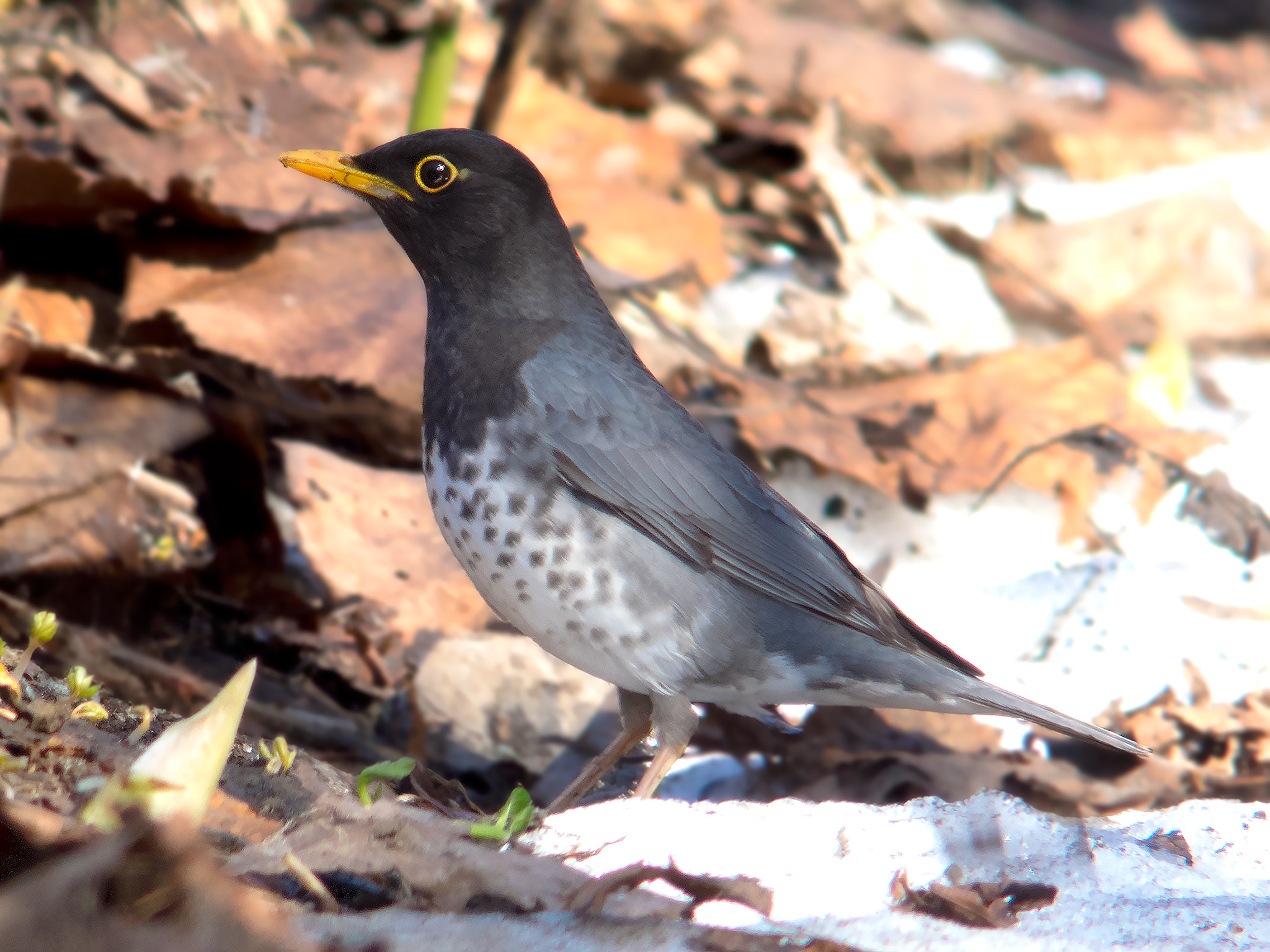
Experiments on Japanese Thrushes show how ant secretions left on feathers can help keep some insects away.
The sight can seem surprising: a bird picks up ants and works them through its feathers, or allows them to crawl over its body. Known as anting, this behaviour has been reported in more than 200 bird species. What looks like a perfume bath may help protect birds against insects.
In a peer-reviewed study published in early November in Scientific Reports, Japanese researchers tested this idea on the Japanese Thrush using two ant species. Chemical analysis showed that ant treatment altered the compounds on the birds’ body surfaces, notably adding an ant-derived volatile substance called dendrolasin.
In an experiment involving 165 birds, the researchers compared two ant-treatment groups with a control group. They collected more louse flies and other insects that had left the birds in the treatment groups, supporting the treatment’s ability to remove some external parasites.
Separate laboratory experiments tested the effects of ant secretions on mosquitoes using treated pieces of feather. Fewer mosquitoes remained on the treated feathers, while tests of some compounds also found repellent effects. Responses varied among insects and parasites.
The findings offer a possible explanation for a behaviour that has long intrigued researchers: birds may borrow ants’ chemical defences to care for their bodies. Whether this reduces disease transmission, including avian malaria, still needs to be tested in the wild.
“Perfuming with ants” may therefore be a useful interaction between the worlds of feathers and insects, rather than a quest for a pleasant scent.
Tokumi / Wikimedia Commons