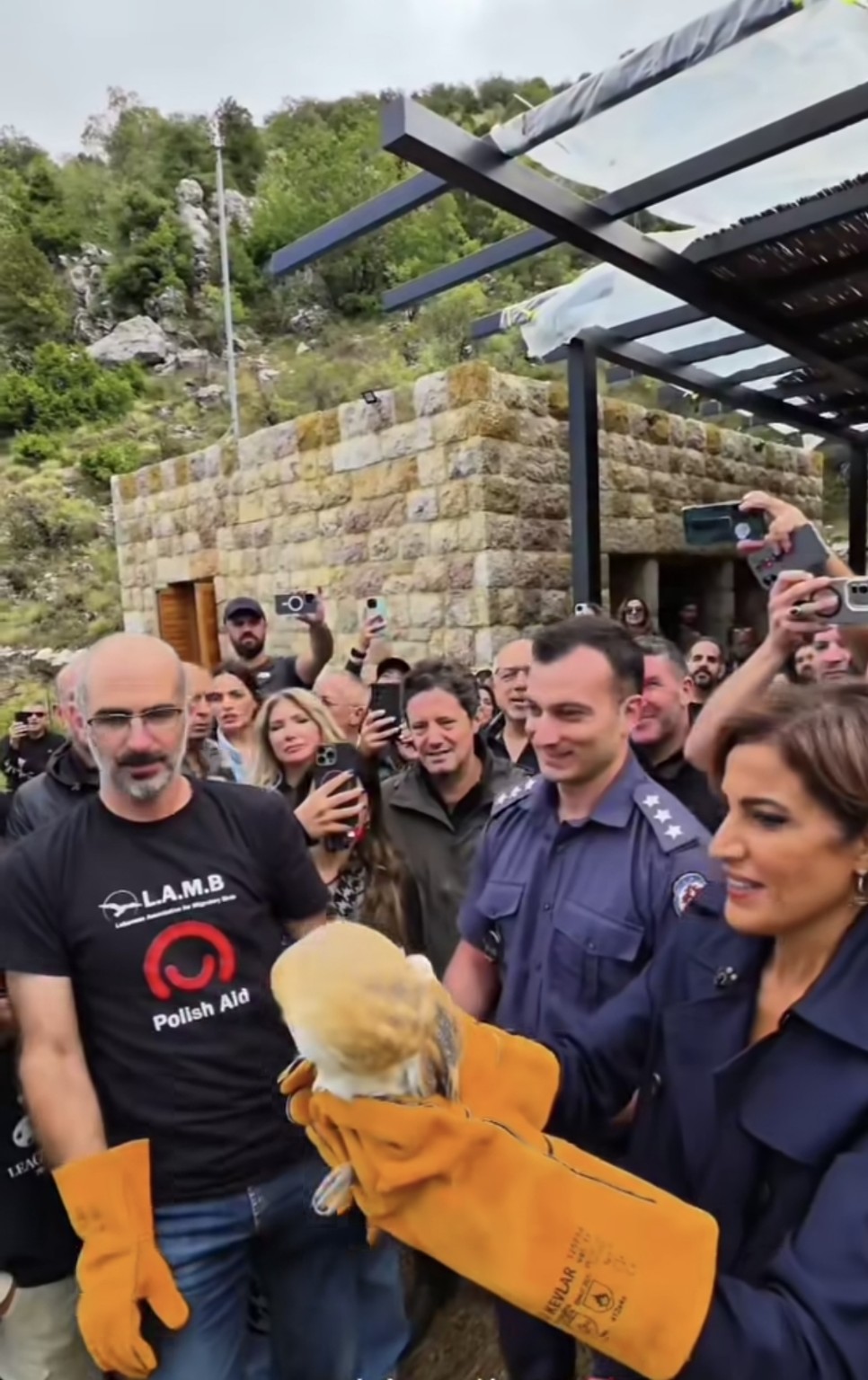
Environment Minister Dr Tamara El Zein visited the Lebanese Association for Migratory Birds’ centre in Jerjour, in the district of Zgharta, to learn about efforts to rescue, care for and rehabilitate injured birds for their return to the wild. The visit included the release of treated and rehabilitated birds in Horsh Ehden Nature Reserve to mark World Migratory Bird Day.
The programme also included an environmental tour of the reserve to explore its biodiversity and natural riches, before concluding with the opening of an insect exhibition.
From injury to another chance to fly
The visit highlights work that extends beyond the moment of release: receiving an injured bird, providing appropriate care and monitoring its recovery until it can return to the wild.
The association’s centre, headed by Dr Michel Sawan, receives wild birds of different species, including raptors and storks. Care involves isolating cases when necessary, treating wounds and fractures, and rehabilitation. Injuries that cause permanent disability may prevent a bird’s release, in which case its care continues within the association’s facilities.
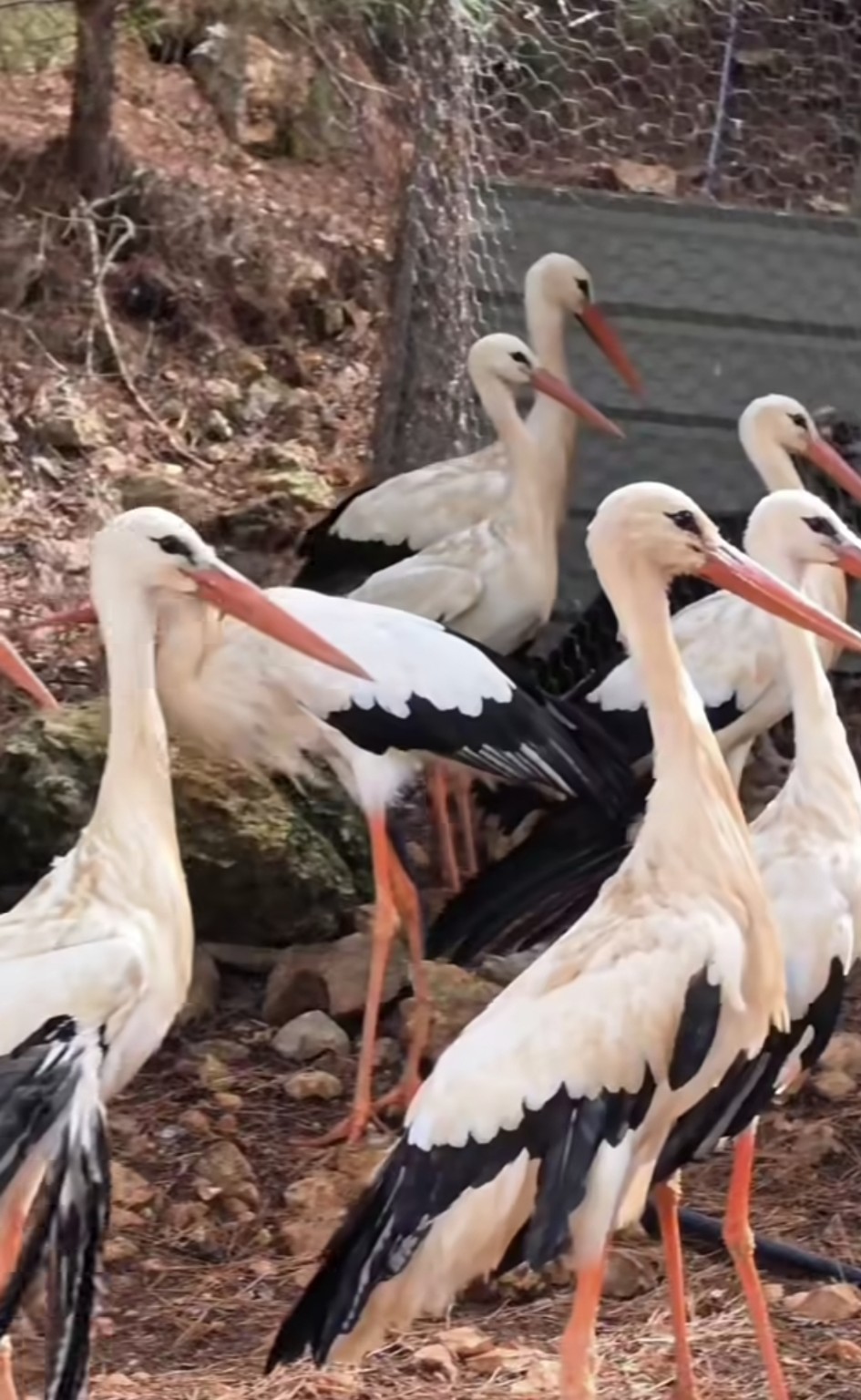
Images from the site show a group of white storks in a fenced care area — a scene that captures the centre’s role as a place to regain strength before a possible return to the sky.
Storks and raptors return to the wild
During 2025 and 2026, the association’s activities documented other milestones in returning birds to nature. On 5 April 2025, it organised a release with the Polish Embassy in Beirut, including storks that had undergone lengthy rehabilitation after being rescued from illegal hunting.
In June 2026, the release of a honey buzzard was announced in cooperation with the municipality of Metrit in Koura, after the bird received care at the association’s shelter and recovered from its injury. The event conveyed a message about protecting raptors and their role in agricultural ecosystems, while connecting bird rescue with local community participation.
Feliks… a rescue journey across borders
Among the most striking stories to emerge in 2026 was that of Feliks, an eastern imperial eagle that set off from Serbia and reached Syria, where it fell into the hands of illegal hunters.
The Lebanese Association for Migratory Birds helped rescue him. He spent more than six months at a shelter in northern Lebanon before returning to Serbia. There, a specialist team continued his care and flight training until he was released near Subotica on 6 August 2026. Tracking showed that within days he had reached the Slovak–Polish border.
This story illustrates how protecting a migratory bird may require cooperation across countries: its route connects regions and nations that share responsibility for keeping it safe.
Protection continues after release
Alongside rescue, the association raises awareness of the value of wildlife. In July 2025, it worked with the North Lebanon Agriculture Department on a seminar in Danniyeh about the role of birds and wild animals in protecting crops and forests.
The environment minister’s visit brings these elements together: care within the centre, a return to nature and attention to reserves and biodiversity. Yet the rescue journey does not end when a bird spreads its wings. Its safety still depends on protecting habitats and migration routes, respecting hunting laws and preventing attacks on protected species.
Images: stills from a video published on the Lebanon Heaven page.