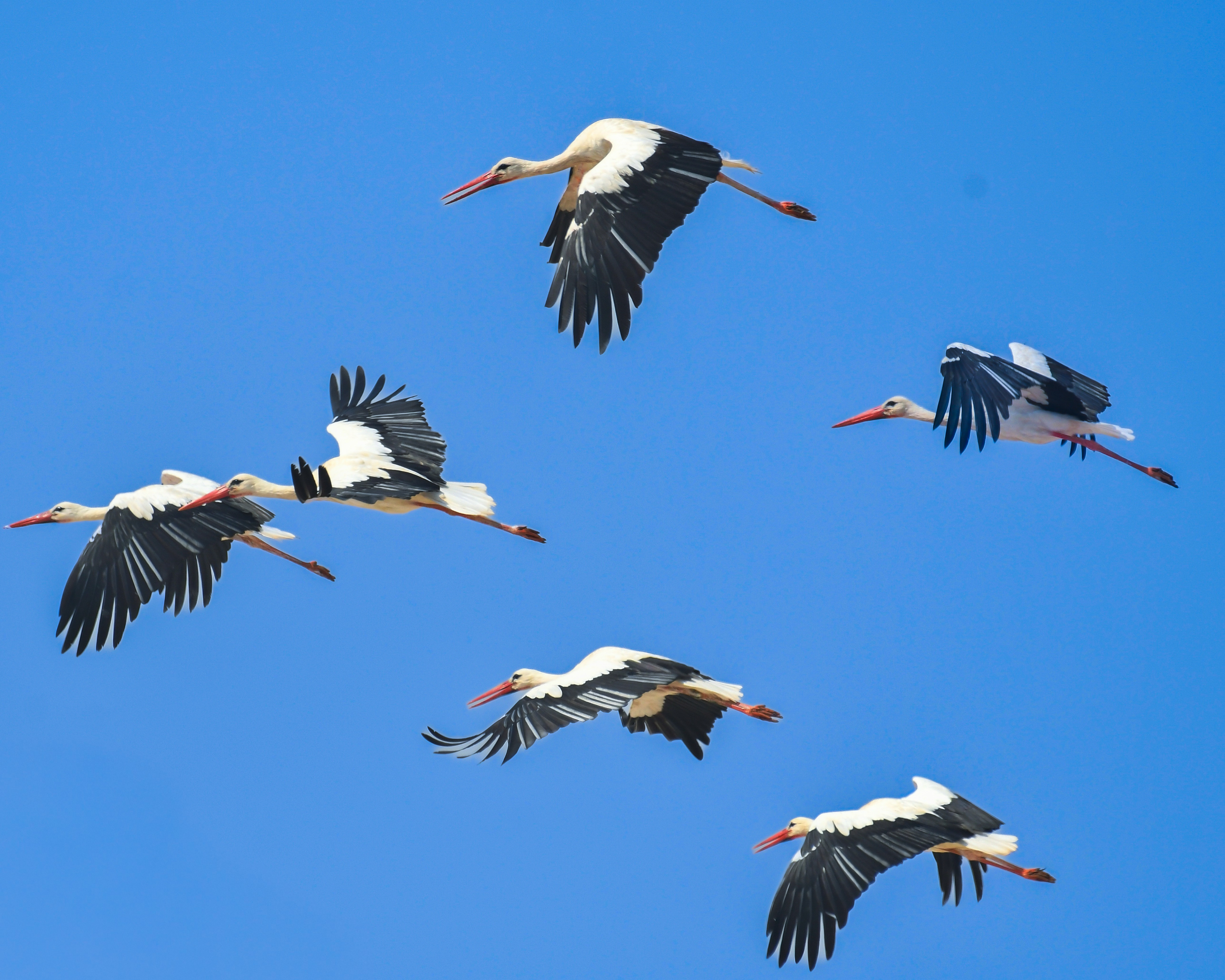
Range: A large bird with white wings tipped black, and red bill and legs. It breeds across Europe, North Africa, and western Asia, and winters mainly in sub-Saharan Africa. Its eastern flyway runs through Turkey, the Levant, and the Nile Valley; Lebanon is part of the Levantine bottleneck for soaring migrants between Europe and Africa. It is told from the black stork Ciconia nigra by its mostly white plumage and red bill.
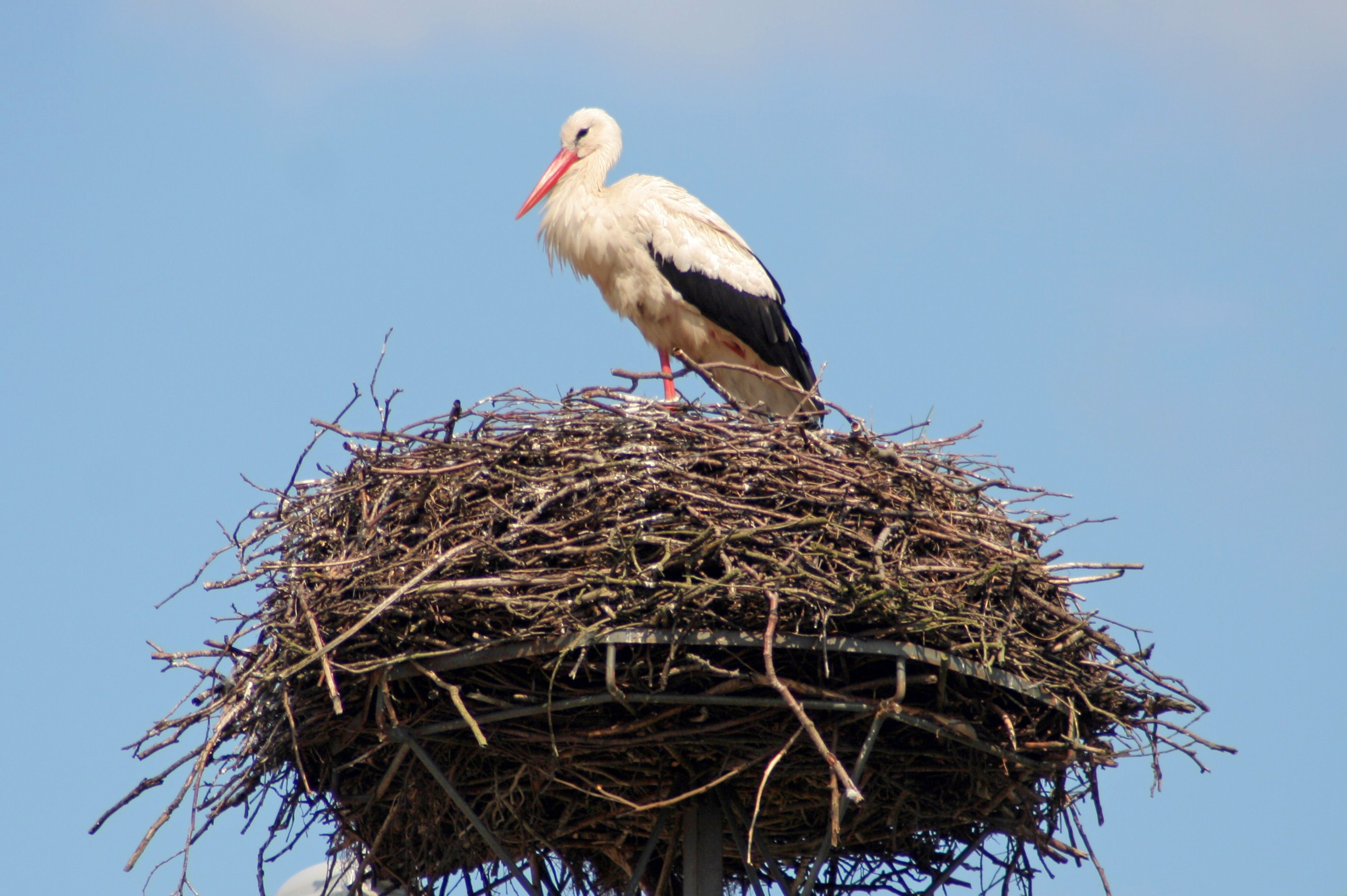
Life cycle and habitat: Socially monogamous in the season; the male arrives early and chooses the bulky stick nest, often reused for years on trees, rooftops, or platforms. The female typically lays about four eggs; incubation lasts roughly 33–34 days with both parents sharing; hatching is asynchronous. The parents feed the young; fledging follows after about 58–64 days. It forages in damp meadows, shallow farmland, and pools: insects, worms, amphibians, small reptiles, rodents, and sometimes fish or nestling birds.
Lifestyle: Gregarious on migration and in winter gatherings; more territorial at the nest. The famous bill-clattering, amplified by the throat pouch, is its social signal. It climbs on warm air then glides long distances, saving energy against continuous flapping; it avoids long Mediterranean sea crossings because thermals form poorly over water. Hence the preference for land bridges and bottlenecks—among them Lebanese skies at peak seasons.
Hunting status: Across Arab countries, hunting white stork is generally prohibited unless a specific state issues an official seasonal decree that expressly lists it. In Lebanon, Wild Hunting Law No. 580/2004 limits hunting to quarry species set by the minister; everything else is protected year-round; white stork is not among the permitted quarry in the absence of a current open-season decision.
Conservation status: Globally Least Concern with the International Union for Conservation of Nature, with an increasing trend in parts of Europe thanks to protection programs. It remains exposed to wetland loss, power lines, and illegal shooting on some flyways.
Traits: A lesson in flight economy. Its massive nest can become a living structure that sometimes hosts smaller birds. Bill-clattering is a clear social message without complex song. Over Lebanon it passes as an emblem of the eastern–African migration corridor.