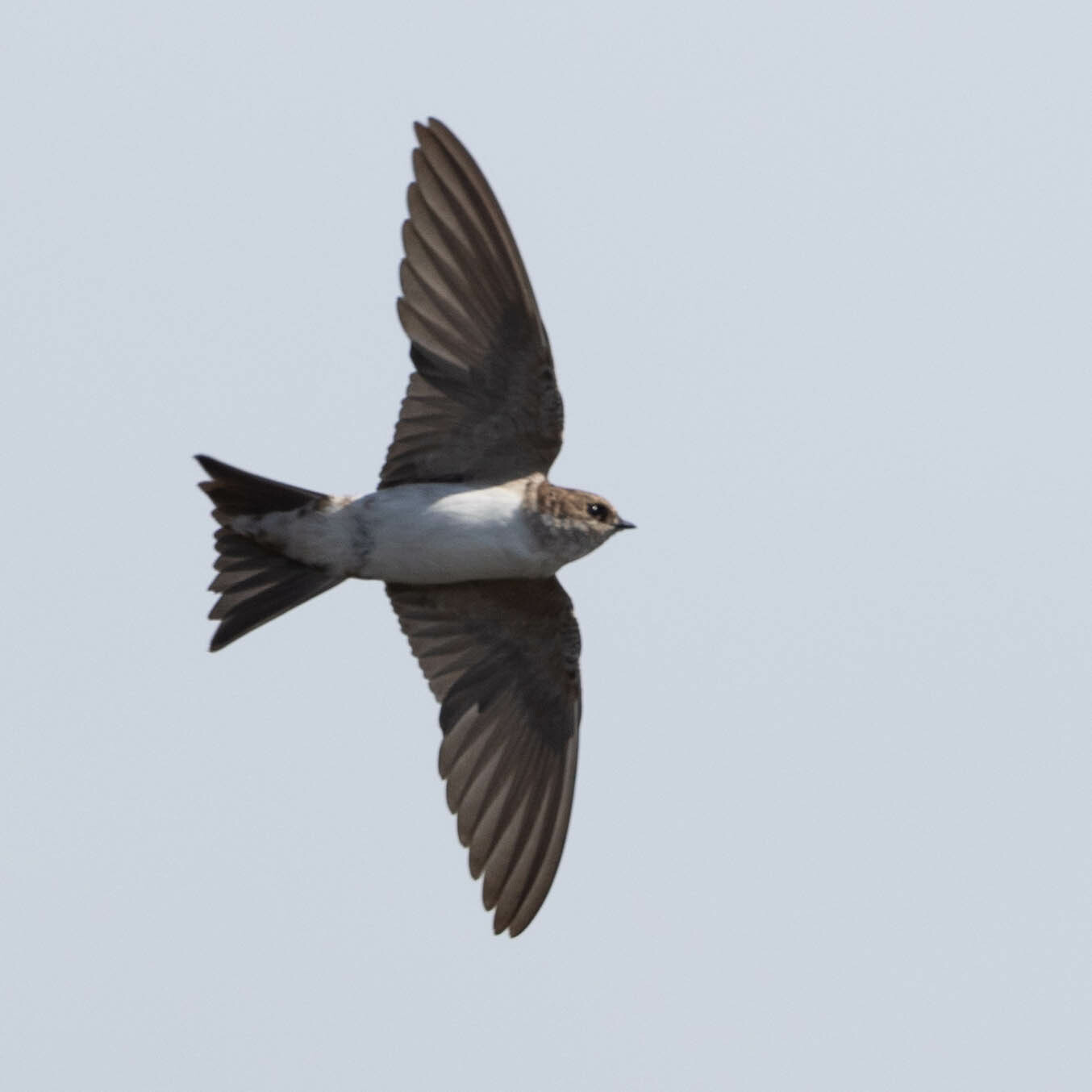
Delichon urbicum
Identity and identification
Western House Martin Delichon urbicum, also called Common House Martin, belongs to Hirundinidae. Glossy dark upperparts contrast with a white belly and diagnostic white rump above the tail. Its forked tail is shorter than Barn Swallow’s. Martins are not swifts: the latter belong to another family and have more strongly sickle-shaped wings. It is placed in the order Passeriformes. The IUCN category carried in AviList 2026 is Least Concern (LC).
Habitat, food and behaviour
It catches flying insects over farmland, water and settlements, using open feeding areas near nest sites. Mixed flocks with other swallows occur. Water and mud are necessary for construction, while airborne food varies with weather.
Breeding and parental care
A nearly enclosed mud nest with a small entrance is built beneath an eave or overhang. BTO gives four or five eggs, shared incubation for 13–19 days and young leaving after about 19–25 days. Two broods are possible. Weather and food affect these reference durations; they are not a fixed local calendar.
Range and Arab occurrence
It breeds in parts of Europe, North Africa and western Asia and migrates to Africa. In Lebanon it is a migrant breeder and passage migrant around suitable buildings and cliffs. Old winter mud nests do not show that their occupants remain present.
Seasonality and observation
Lebanon’s checklist places breeding from March to mid-July and passage in February–May and September–early November. Early November can catch late passage. White rump and nest structure aid documentation without disturbing colonies.
Ecological role and conservation
It consumes aerial insects and is affected by insect declines and nest removal during building work. Scheduling repairs outside nest occupation and maintaining access help. Nest boxes cannot replace lost feeding habitats or counter extensive pesticide use.
References
Ramadan-Jaradi et al. — Updated checklist of the birds of Lebanon, Sandgrouse 42 (2020), 186–238.
British Trust for Ornithology — BirdFacts: House Martin.
AviList Core Team — AviList: The Global Avian Checklist, v2026 (20 October 2026).
Photo: Paulo Caseirito — CC0 1.0.