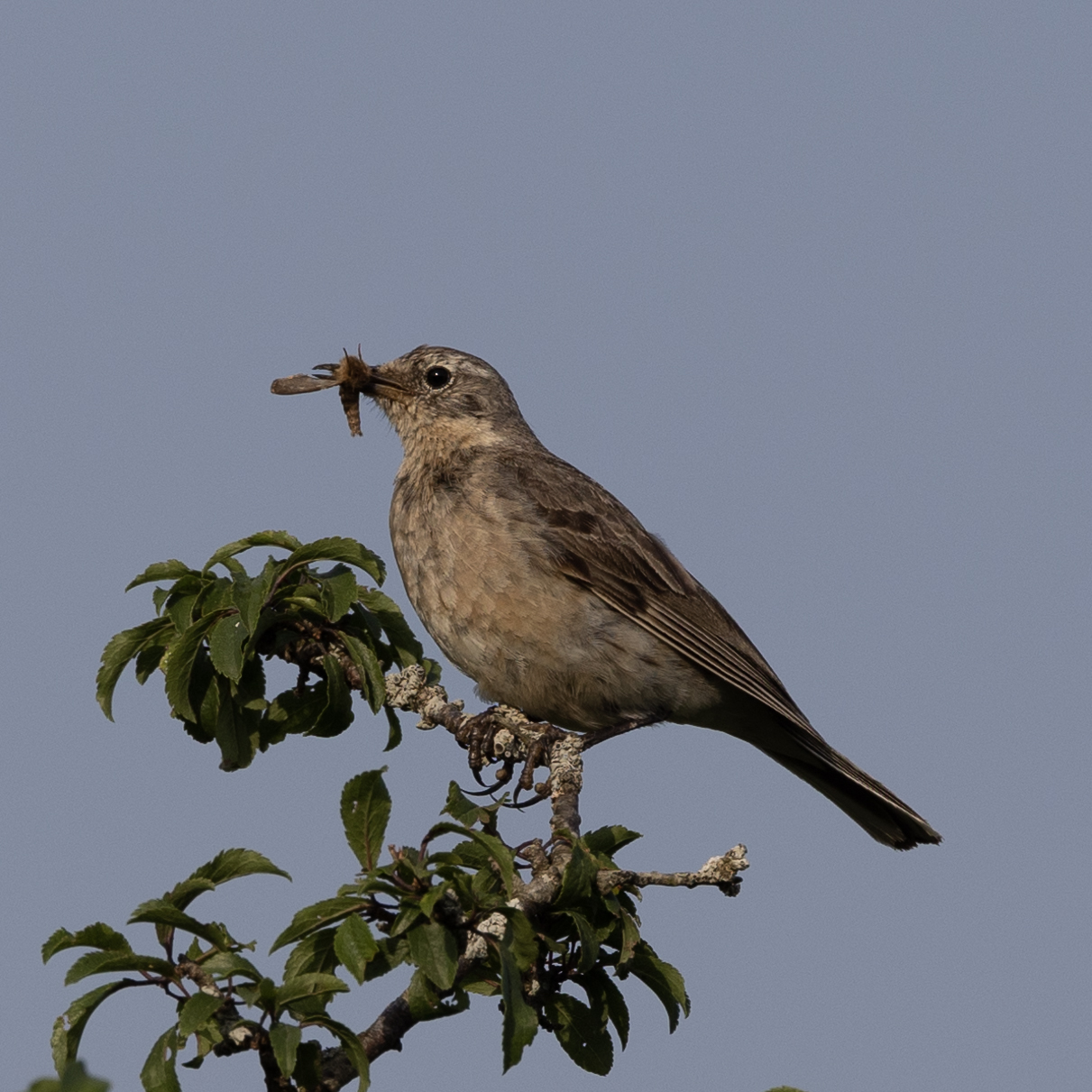
Anthus spinoletta
Identity and identification
Water Pipit Anthus spinoletta belongs to Motacillidae. Winter plumage shows a pale eyebrow, streaked breast and usually dark legs. The breeding breast becomes less streaked and pinkish. Compare face, wings and legs with Meadow Pipit: a photograph beside water cannot establish identity by itself.
Habitat and food
It collects insects and other invertebrates from damp ground and water margins. Populations breed in mountain grasslands, moving to lower, warmer habitats outside breeding.
Breeding and development
The ground nest is concealed among vegetation. BTO gives a typical clutch of 4–5 eggs, female incubation of 14–15 days and nest departure around 15–16 days. Hatchlings cannot support themselves and need feeding; nest departure is not full independence.
Arab occurrence and seasonality
Lebanon’s 2020 checklist describes widespread passage from mid-September to late November and mid-February to early May, with scarce, local wintering in wetlands. Qatar’s current list classifies it as a common winter visitor. November thus connects Lebanese passage with Qatar’s winter season, at different abundance.
Observation and conservation
Retaining wet margins and damp grassland preserves feeding habitat. Watch without repeatedly displacing birds between feeding patches.
British Trust for Ornithology — BirdFacts: Water Pipit · RSPB — Water Pipit · Ramadan-Jaradi et al. — Updated checklist of the birds of Lebanon, Sandgrouse 42 (2020) · Qatar Bird Observation Group — Qatar Bird List · AviList Core Team — Global Avian Checklist v2026, 20 October 2026
Species illustration: Paulo Caseirito — CC0 1.0. · 1 · https://creativecommons.org/publicdomain/zero/1.0/