GPS data reveal sea and desert crossings, critical stopovers and substantial gaps in knowledge.
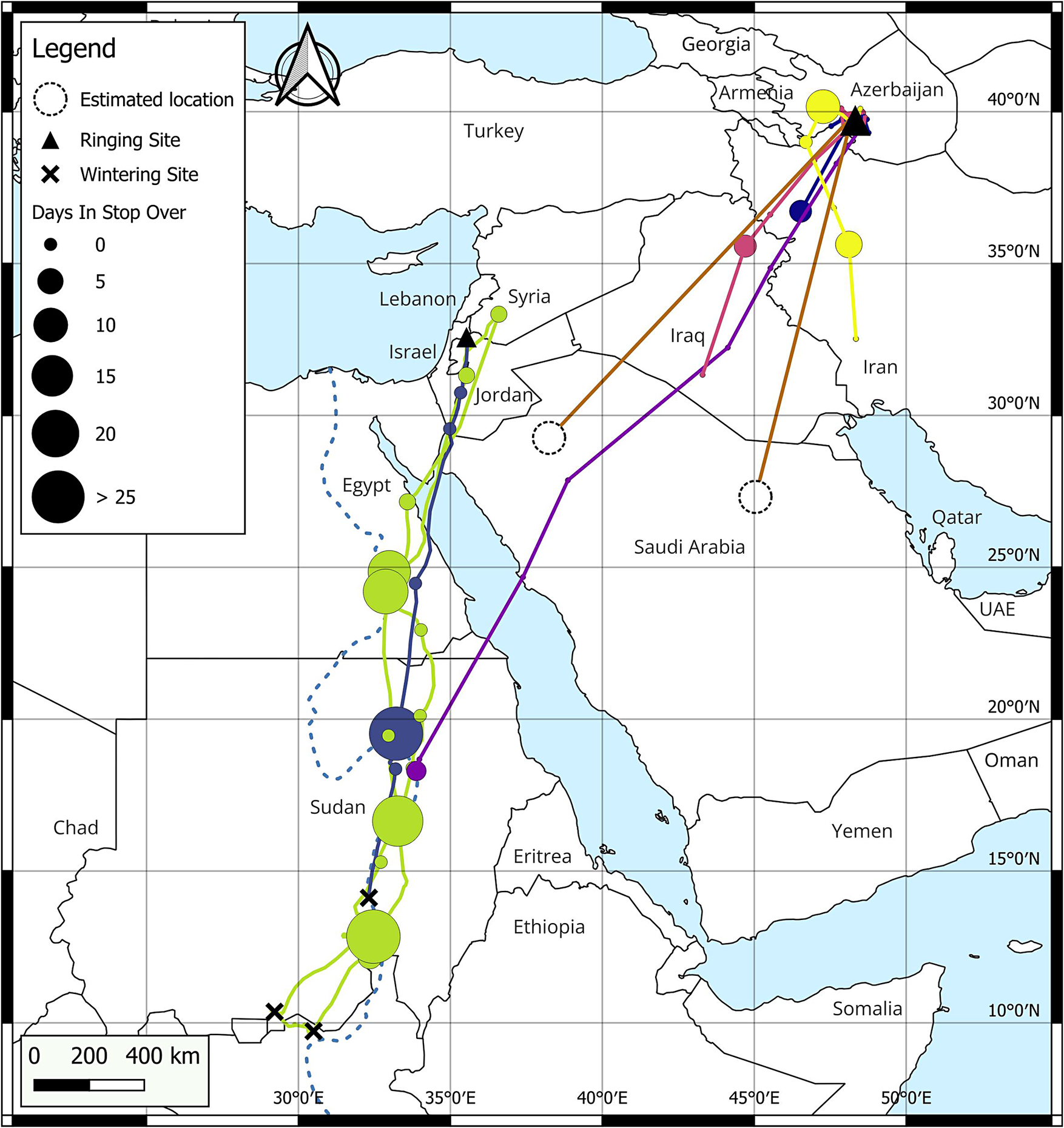
A migratory route is more than a line across a map. For the European Turtle-dove (Streptopelia turtur), it is a chain of habitats where birds must find food and rest while crossing seas, deserts and human-altered landscapes.
A peer-reviewed study published online in Bird Conservation International on 8 October 2026 describes GPS tracking of 26 turtle-doves tagged in Azerbaijan and the eastern Mediterranean. Sixteen were recorded beginning southward migration; two provided particularly extensive tracks reaching Sudan and South Sudan.
The recorded journeys included non-stop movements of daily migration movements of up to 752 kilometres, while the longest documented continuous flight covered 719 kilometres and crossings of the Red Sea and desert. Farmland along the Nile emerged as an important stopover environment, particularly in Egypt and Sudan.
The conservation implication is regional: protecting breeding grounds cannot substitute for maintaining stopover habitats along an entire flyway. Hunting pressure and habitat change must be considered across borders.
These tracks are not a definitive map for the species. The sample is limited and most tagged birds did not yield complete migration records. The researchers therefore identify promising areas for further study rather than claiming comprehensive coverage.
Original research: Perlman et al., Bird Conservation International, 8 October 2026. DOI: 10.1017/S0959270926100860. Open access under CC BY 4.0.