Calidris pugnax — beyond the spectacular breeding ruff
The current name
The Ruff is Calidris pugnax, a member of Scolopacidae within Charadriiformes. AviList 2026 places it in Calidris. Philomachus pugnax, still found in older books and databases, is an earlier combination for the same species, not another bird. Its Arabic name, al-naffash al-mushakis, evokes the displaying, competing males; it does not mean that the species habitually attacks other birds. This is a wader whose appearance changes dramatically between the breeding season and autumn. Lebanon’s 2026 guide uses the Arabic name durayja sharisa.
Breeding finery is not winter plumage
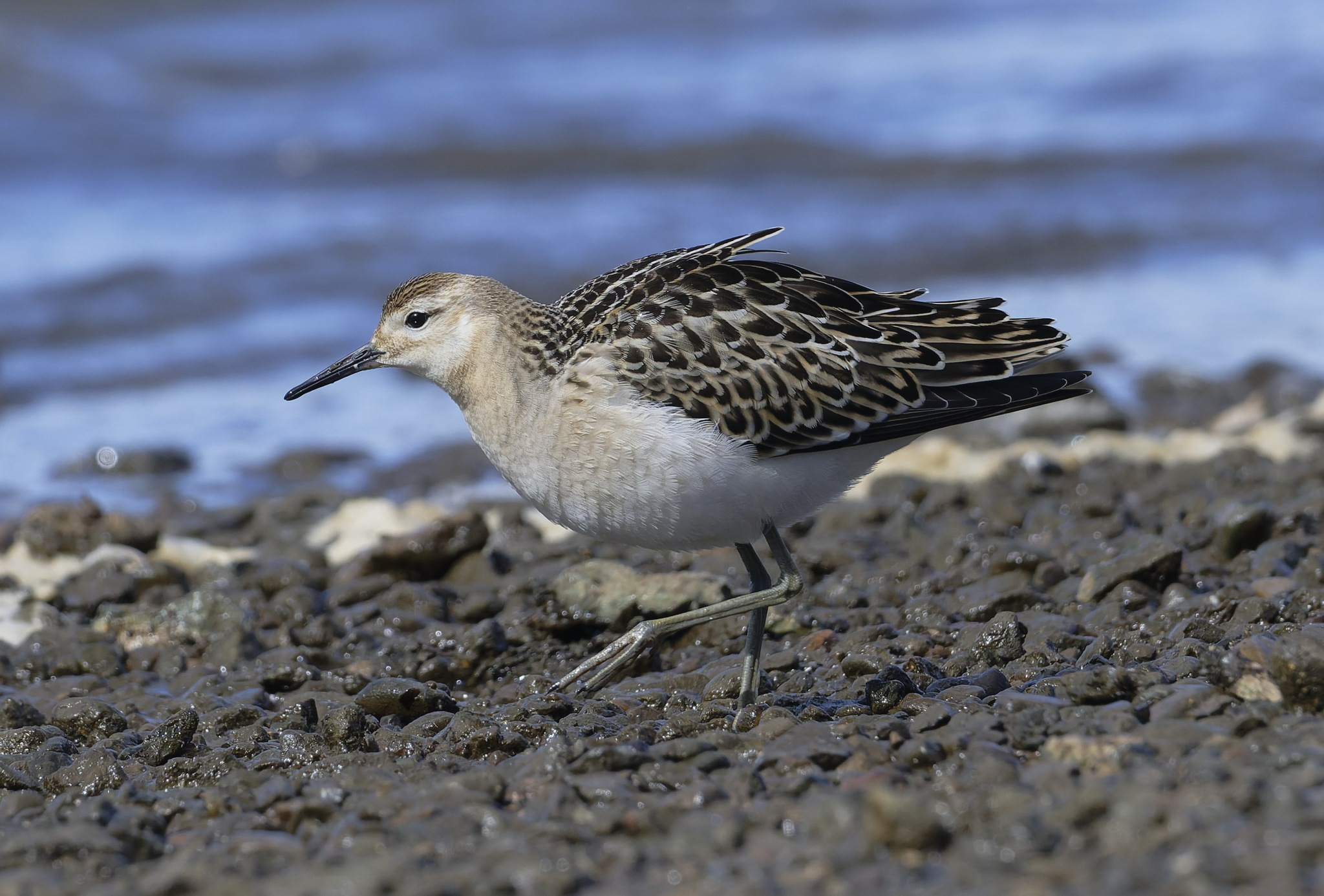
Many breeding males carry an extravagant neck ruff and head tufts, varying from white to black and reddish brown. Males are markedly larger than females, but non-breeding birds lack this conspicuous finery. Look instead for a small head, relatively long neck and a moderately short bill with a slightly drooping tip. Leg colour varies and is unreliable alone. Juveniles often have a warm-toned face and breast and neatly pale-edged upperpart feathers. White patches beside the tail base help in flight: structure and several plumage characters matter more than the famous ruff.
Finding it among other waders
A small female can be confused with other sandpipers, while a larger male in the same flock may look surprisingly different. Size differences alone do not establish different species. Head and bill proportions and the pattern of white in wings and tail help separate it from Common Redshank; structure and plumage also distinguish Wood Sandpiper. Distant photographs may remain inconclusive. In autumn and winter, seeing a Ruff without a ruff is normal, not evidence that the photograph has been misidentified.
Feeding and breeding
It uses wet fields, flooded grassland, pools and muddy margins rather than being restricted to the sea. It takes invertebrates from land and shallow water and also eats plant material and seeds. Outside breeding it gathers in flocks, sometimes mixed with other waders. Breeding occurs in northern Eurasian wetlands, where males assemble at display grounds visited by females. The female incubates and cares for the chicks; males do not provide brood care. Nests are on the ground and chicks are mobile after hatching. Many birds winter in Africa, with wintering areas also extending into southern Asia.
Seasons in Arab countries
Lebanon’s 2020 checklist describes common to abundant passage, with autumn movement from early August to mid-November and scarce winter occurrence at some coastal sites. An early-November sighting may therefore represent late passage rather than an established winter flock. Kuwait lists uncommon passage and rare winter occurrence, with summer visits that do not establish breeding. Oman, by contrast, lists abundant passage and winter visitation. Moroccan waterbird counts document winter presence. These local categories should not be transferred across the entire Gulf or Levant: water conditions, season and management of surrounding fields shape a site’s value. Lebanon’s 2026 guide confirms abundant passage and scarce winter occurrence.
Conservation and responsible conduct
Its global category is Least Concern, but wetland loss, grassland conversion, pollution and disturbance can reduce feeding and breeding habitat. A mosaic of pools and wet fields can matter as much as a large lake. Watch flocks from a distant edge without repeatedly flushing them, especially while they refuel on migration. Conservation status is not a hunting permit, and the species’ exceptional plumage variation warrants caution before identifying a distant bird or photograph.
References
AviList Core Team — AviList v2026, 20 October 2026.
British Trust for Ornithology — BirdFacts: Ruff; RSPB — Ruff.
Kuwait Ornithological Rarities Committee — Kuwait Bird List; Kuwait Birds: Ruff.
Ramadan-Jaradi et al. — Updated checklist of the birds of Lebanon, Sandgrouse 42, 2020.
Birds of Oman — national species database, Ruff under the earlier combination Philomachus pugnax.
Waders wintering in Morocco: national population estimates and trends, Wader Study Group Bulletin 96, 2001.
Ramadan-Jaradi & Itani — Birds of Lebanon: A Photographic Guide to 409 Species, second edition, UNDP, June 2026.
Photo: Лариса Артемьева — CC0-1.0.