A peer-reviewed Nature fossil study identifies a striking early terrestrial branch of bird evolution.
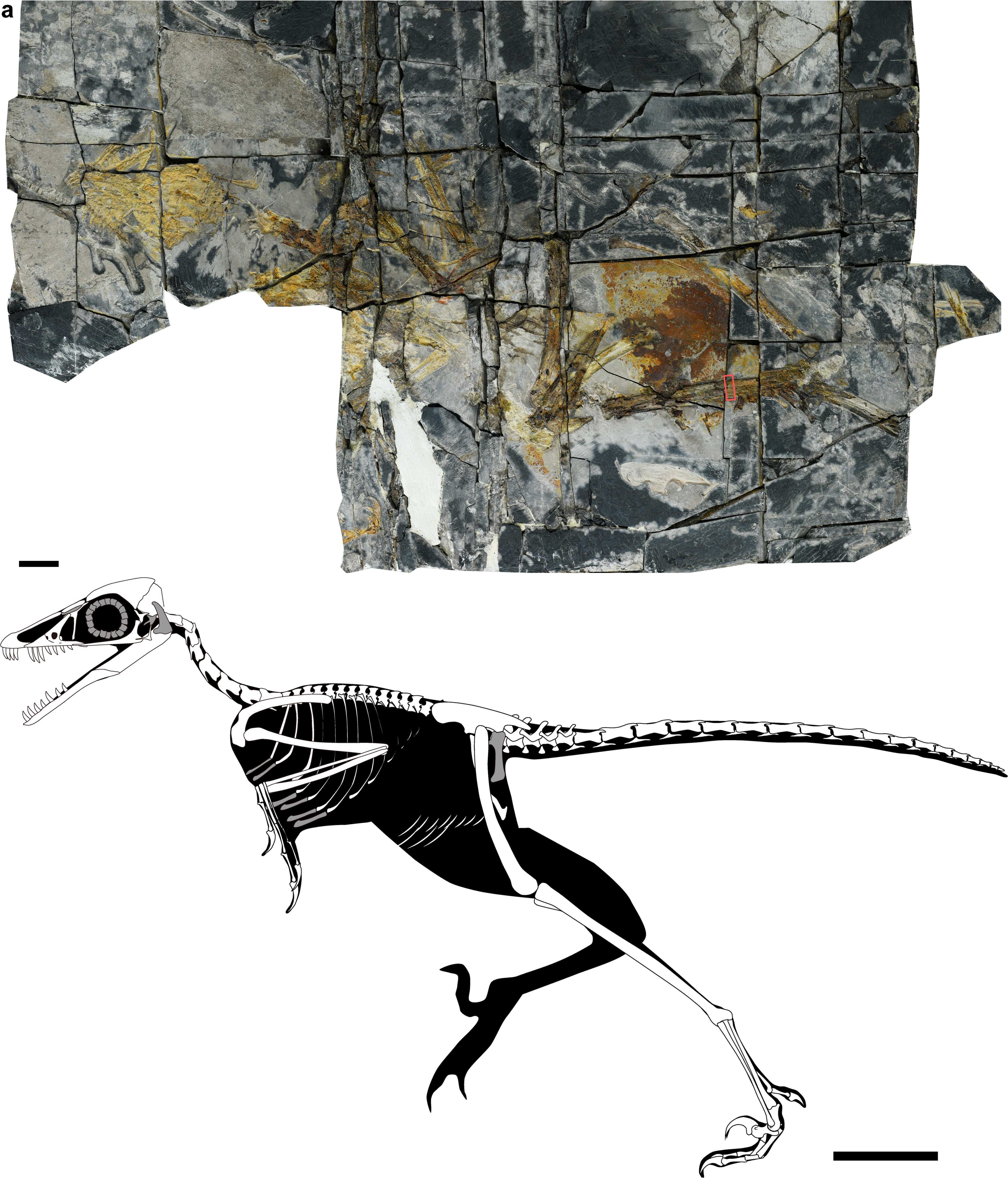
The early history of birds was not necessarily a straight path towards more powerful flight. A newly described Late Jurassic species from southeastern China provides evidence for a different ecological experiment around 150–148 million years ago.
The fossil, Yuezhuornis yangyuanensis, comes from the Zhenghe Fauna of Fujian Province. In research published in Nature on 14 October 2026, scientists describe a mosaic of bird-like and dinosaur-like anatomical features. Most notably, the forelimbs were markedly short relative to the rest of the skeleton.
Comparative analyses led the authors to infer that this bird lived on the ground and was flightless. Skull, dental and foot characteristics offer further evidence that the earliest avialans followed several anatomical and ecological pathways rather than one universal trajectory.
The finding does not settle when flight first evolved, nor does it show that every early bird was flightless. Whether this particular lineage inherited or subsequently lost flight capabilities is part of the larger evolutionary discussion.
The discovery matters because it expands the known diversity of Jurassic birds at a time when fossils remain exceptionally rare.
Original research: Xu, Wang et al., Nature, 14 October 2026. DOI: 10.1038/s41586-026-10972-z.