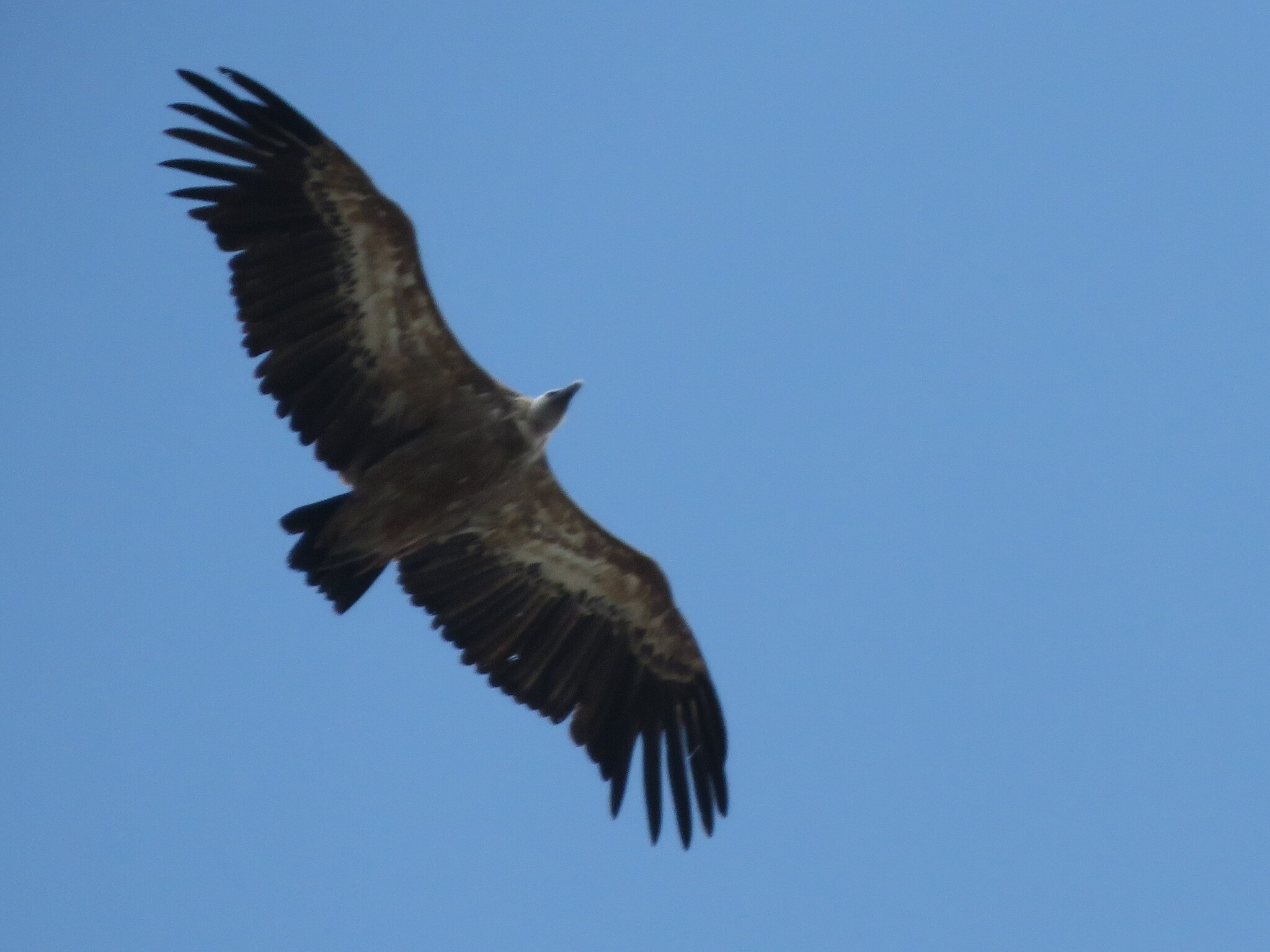
Gyps fulvus
Identity and identification
Griffon Vulture Gyps fulvus belongs to Accipitridae. Large, with broad wings, dark flight feathers and a pale-brown body, it has a long pale-down-covered neck with a ruff at the base. The tail is relatively short. Juveniles differ; large size alone cannot separate vultures and eagles. It is placed in the order Accipitriformes. The IUCN category carried in AviList 2026 is Least Concern (LC).
Habitat, food and behaviour
It searches widely for carrion above mountains and plains, using rising air. Feeding is often social and requires available, safe carcasses. A vulture near livestock is not evidence of attacks on healthy animals: carrion is its principal resource.
Breeding and parental care
Colonies occupy cliff ledges and pairs usually lay one egg. Both parents incubate and feed the chick regurgitated food; rearing takes months. A slow reproductive cycle makes adult loss and nest failure consequential. One successful season cannot readily replace a lost breeding pair.
Range and Arab occurrence
Its Mediterranean and western Asian range includes Arab mountain regions, with local declines or losses. Lebanon’s checklist documents historical breeding but uncertain current resident and breeding status, alongside scarce passage. Historical records must not be presented as proof of a colony active today.
Seasonality and observation
Residents may be seen year-round near occupied areas, with movements beyond them. November mountain viewpoints help locate soaring birds. Never use an unverified carcass to attract vultures: an ordinary appearance does not establish freedom from poison.
Ecological role and conservation
Carrion removal is a major role, but poisoning, electrical hazards and disturbance threaten it. One contaminated carcass can kill several birds. Nest protection, poison prevention and organised livestock-carcass management belong together; supplementary feeding needs specialist management.
References
Ramadan-Jaradi et al. — Updated checklist of the birds of Lebanon, Sandgrouse 42 (2020), 186–238.
Royal Commission for AlUla — Birds of AlUla, Griffon Vulture.
Jerusalem Biblical Zoo — Griffon Vulture conservation programme.
AviList Core Team — AviList: The Global Avian Checklist, v2026 (20 October 2026).
Photo: Dominique — CC0 1.0.