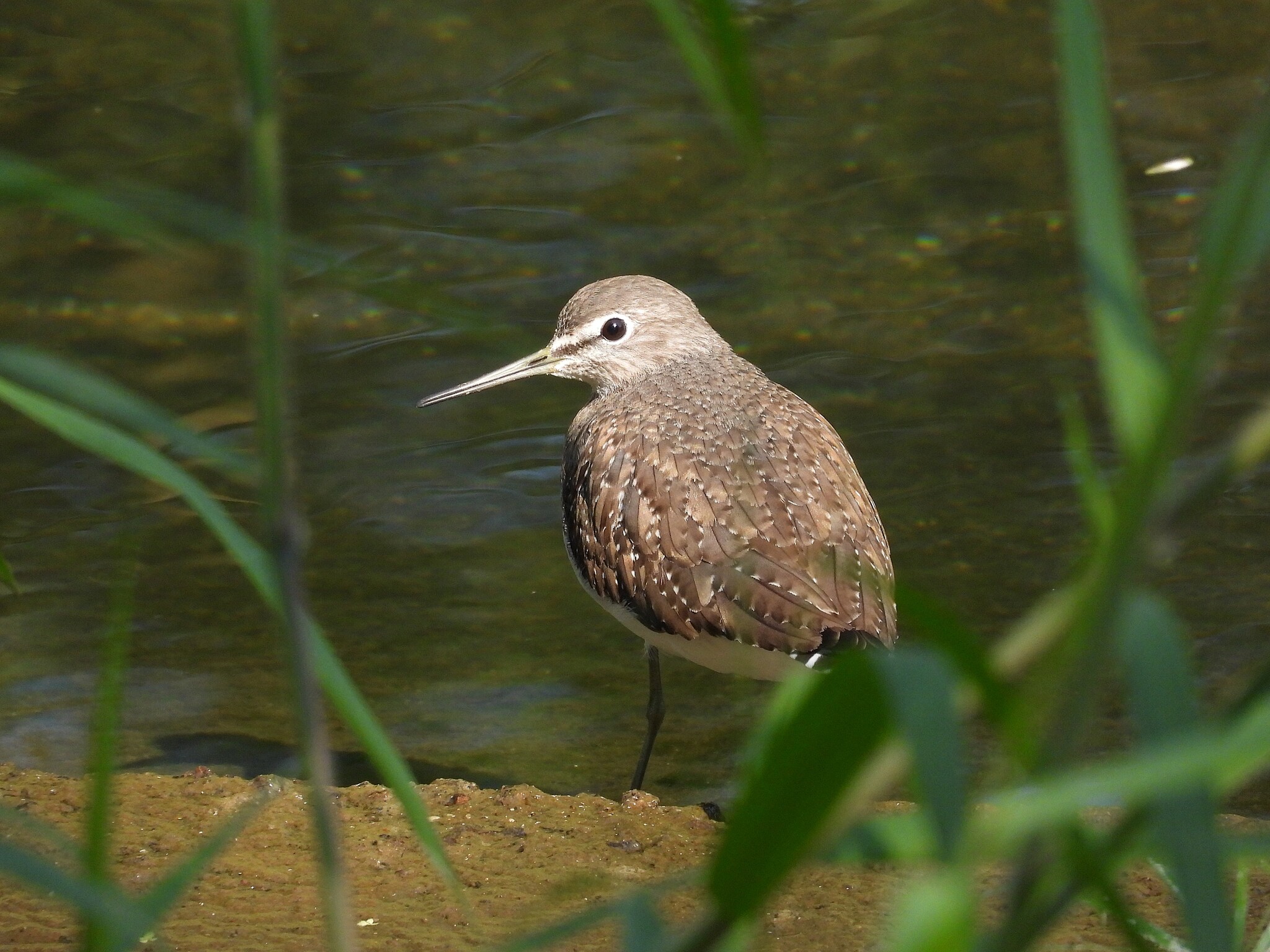
Tringa ochropus — White rump and dark wings: an Arab wetland visitor nesting in northern trees
Identity and recognition
The Green Sandpiper, Tringa ochropus, is a shorebird in the family Scolopacidae, not a predominantly green bird despite its English name. Dark brown, almost black upperparts contrast with a white belly and a conspicuous white rump in flight. The head and breast carry fine markings, while the tail tip shows broad dark bars. Its straight bill is dark and its legs grey-green. At roughly 21–24 cm long, it is a compact wader.
Age, sex and similar species
The sexes look alike. Juveniles have buff-spotted feather margins; non-breeding adults show less upperpart spotting. Green Sandpipers generally look darker than Wood Sandpipers, and the underwings appear dark in flight. Common Sandpipers show an obvious white wing stripe and lack the same broad white rump. Common Greenshanks are a different, larger species with a longer bill; their similar English names should not obscure these distinctions. A combination of rump, wing, bill and call helps resolve a brief encounter.
Habitats, diet and behaviour
It favours freshwater margins around pools, streams, marshes, ditches and treatment ponds, often appearing alone or in small numbers. Insects and other invertebrates are picked from the surface and shallow water; worms, crustaceans and molluscs are also eaten. It bobs its body, head or tail and gives a clear whistle when alarmed. Flight may begin low and zigzagging before the bird climbs away. This wariness helps explain why encounters can be fleeting glimpses of a white rump rather than prolonged views on an exposed shore.
Breeding and life cycle
Breeding occurs near water in wet wooded parts of northern Eurasia. Unusually among waders, it uses old nests of other birds in trees instead of invariably making a ground scrape. A typical clutch contains four eggs. Incubation lasts about 20–23 days, and young reach flight at approximately 27–29 days; chicks hatch down-covered and mobile. The association with water and trees on the breeding grounds contrasts with a bird using the edge of an Arab pond during migration. Both habitats support different stages of the same annual cycle.
Arab-region distribution and seasonality
Lebanon’s 2020 checklist describes fairly common spring and autumn passage and scarce November–February winter occurrence. Qatar lists a common passage migrant and winter visitor, with records in every month; Oman describes abundant passage and winter occurrence. Regional references also document its presence in Egypt, Morocco, Algeria and Mauritania. The end of October passage in the Levant thus connects with winter residence elsewhere. Small pools can matter alongside larger wetlands for this dispersed species.
Ecology and conservation
Its global conservation category is Least Concern. An invertebrate consumer and prey for predators, it belongs to shallow-water food webs; its ecological importance is not measured by flock size alone. Draining pools, removing natural margins and polluting water can reduce feeding and resting opportunities. Because it uses ditches and small waterbodies, even a localized alteration of a stream edge can affect its habitat. Clean water, varied shallow margins and nearby cover, together with observation from a respectful distance, help birds use successive stopovers without repeated disturbance.
References
Naturalis — Birds of Europe: Tringa ochropus
RSPB — Green Sandpiper identification
BTO — BirdFacts: Green Sandpiper
Wildlife Trusts — Green Sandpiper natural history
Ramadan-Jaradi and colleagues — Updated checklist of the birds of Lebanon, Sandgrouse 42 (2020)
Qatar Bird Observation Group — Qatar bird list
Birds of Oman — species database
BirdLife International — Green Sandpiper species factsheet
LANUK Nordrhein-Westfalen — Tringa ochropus species account
Photo: Stephen Matthews — CC0-1.0.