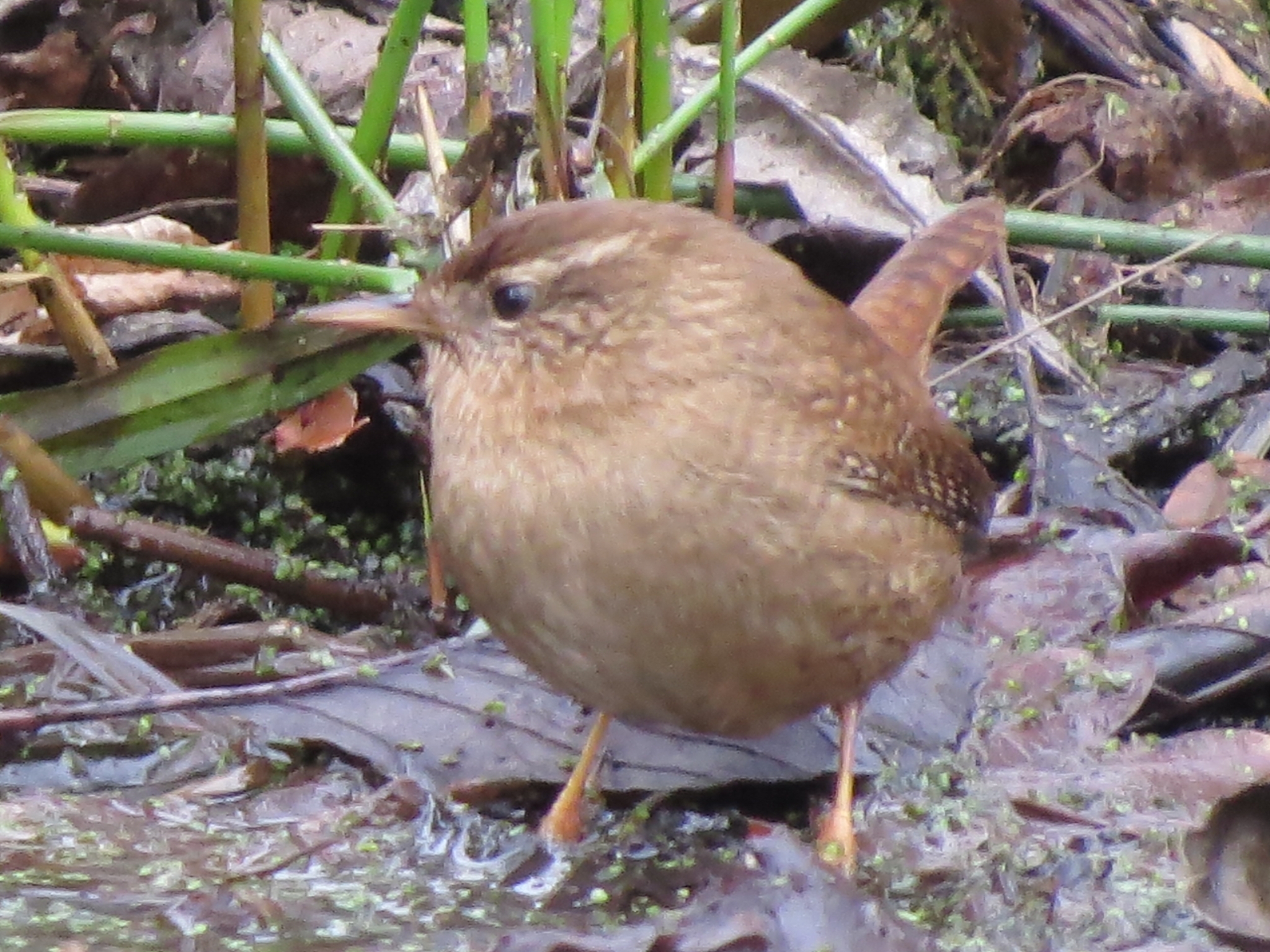
Nannus troglodytes
Identity and identification
Eurasian Wren Nannus troglodytes belongs to Troglodytidae and is widely recorded under Troglodytes troglodytes. Tiny, brown and barred, it has a pale eyebrow and a short tail often held upright. The sexes look alike and the song is remarkably powerful. Different genus names do not create two species. It is placed in the order Passeriformes. The IUCN category carried in AviList 2026 is Least Concern (LC).
Habitat, food and behaviour
Dense scrub, damp woodland, stream margins and gardens with undergrowth provide habitat. It searches leaves and roots for insects, spiders and small invertebrates. Movement is often near the ground; a singing bird need not be visible on an exposed high branch.
Breeding and parental care
The male builds several domed nests with side entrances; the female selects and lines one. BTO gives five or six eggs, incubated by the female for about 16–18 days. Young leave at roughly 15–18 days and receive further care. These reference durations do not transfer a British calendar to Arab climates.
Range and Arab occurrence
Widespread in Eurasia, it also occurs in North African and Levantine woodland. Lebanon has common breeding residents in dense, moist habitats from coast to mountains. Neither small size nor song makes every little brown regional bird a wren.
Seasonality and observation
Resident sites support year-round observation, including November. Calls and watching cover edges are more useful than penetrating dense vegetation. Archive records using old and new names must be reconciled to the same scientific identity.
Ecological role and conservation
Its invertebrate diet links it to ground cover and local moisture. Leaf-litter removal, scrub clearance and stream drying reduce refuges. Retaining dense vegetated corners in gardens and woods preserves food and nests rather than exposing every ground surface.
References
Ramadan-Jaradi et al. — Updated checklist of the birds of Lebanon, Sandgrouse 42 (2020), 186–238.
British Trust for Ornithology — BirdFacts: Wren.
AviList — 2026 taxonomic updates and Nannus/Troglodytes nomenclature.
AviList Core Team — AviList: The Global Avian Checklist, v2026 (20 October 2026).
Photo: Scarlet Rifles — CC0 1.0.