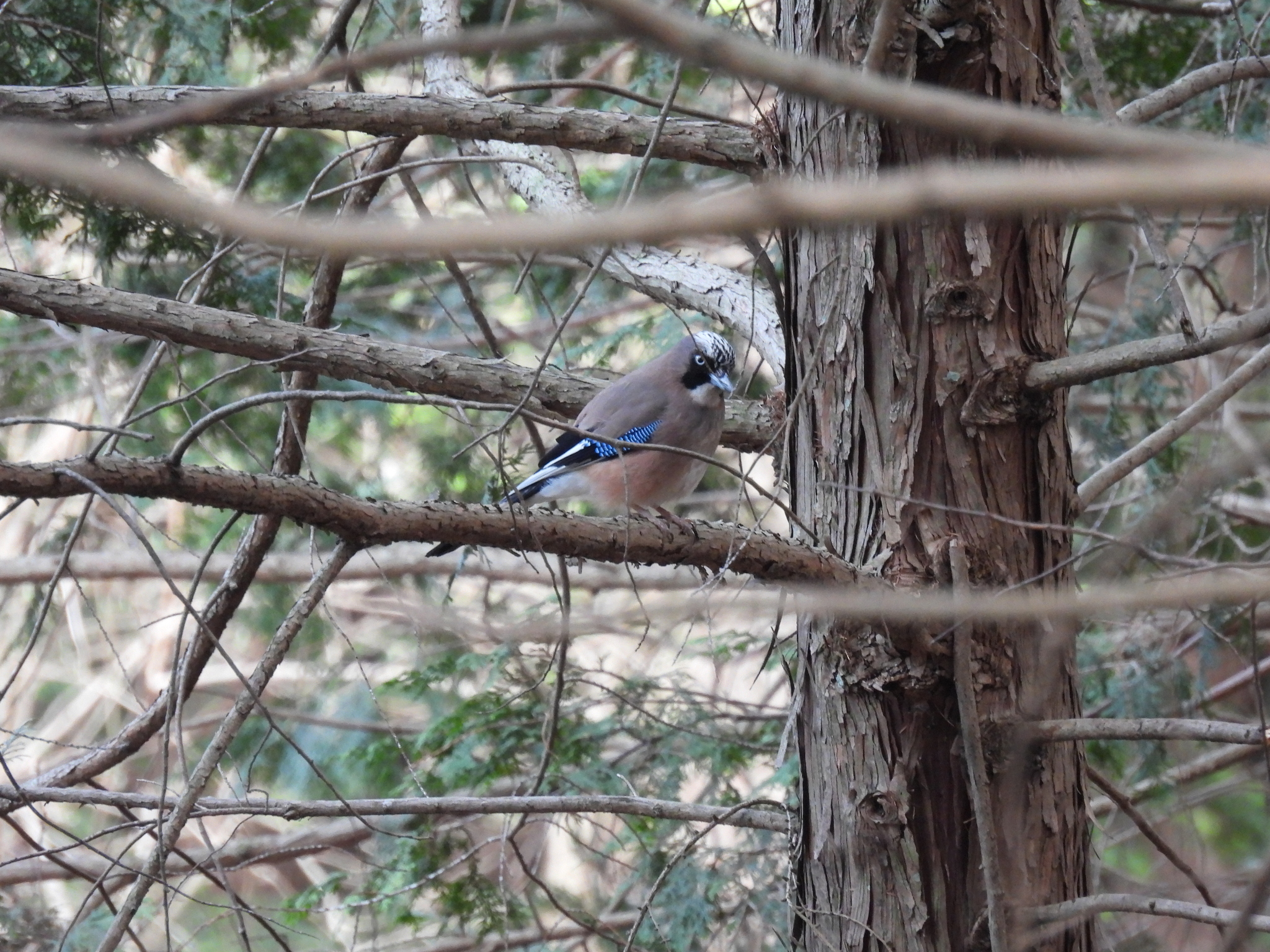
Garrulus glandarius
Identity and identification
Eurasian Jay Garrulus glandarius belongs to Corvidae. A pinkish-brown body, blue-and-black wing panel, dark moustache and white rump in flight are useful features. Head pattern varies geographically. The sexes look alike; the blue panel should be read with shape and other markings. It is placed in the order Passeriformes.
Habitat, food and behaviour
Woodland, forest and wooded orchards, especially with oaks, provide habitat. It eats acorns, seeds, insects and other animal food and caches supplies in the ground. Harsh calls often reveal it before a view, and mimicry occurs. Acorns are important but not its only food.
Breeding and parental care
A twig cup is built in a tree. References commonly give four or five eggs, incubation around 18 days and nest departure about 20–23 days after hatching. Both parents care for young and continue feeding after departure. Climate and altitude influence the calendar.
Range and Arab occurrence
Widespread through Eurasian woodland, it also occurs in North African and Levantine forests. Lebanon’s checklist describes an abundant breeding resident in wooded habitats. This does not extend its ecological requirements to open Arab deserts.
Seasonality and observation
Resident populations can be observed year-round. Autumn collection and storage reveal acorn transport. November woodland-edge viewpoints allow watching without interrupting journeys to caches.
Ecological role and conservation
Some unrecovered cached acorns germinate, contributing to tree dispersal. Forest loss and fragmentation reduce habitat. Protecting connected oak woods benefits both jays and woodland regeneration, without reducing a varied animal to a single role or calling it harmful for occasionally taking prey.
References
Ramadan-Jaradi et al. — Updated checklist of the birds of Lebanon, Sandgrouse 42 (2020), 186–238.
University of Michigan Museum of Zoology — Animal Diversity Web: Garrulus glandarius.
AviList Core Team — AviList: The Global Avian Checklist, v2026 (20 October 2026).
Photo: renshuchu — CC0 1.0.