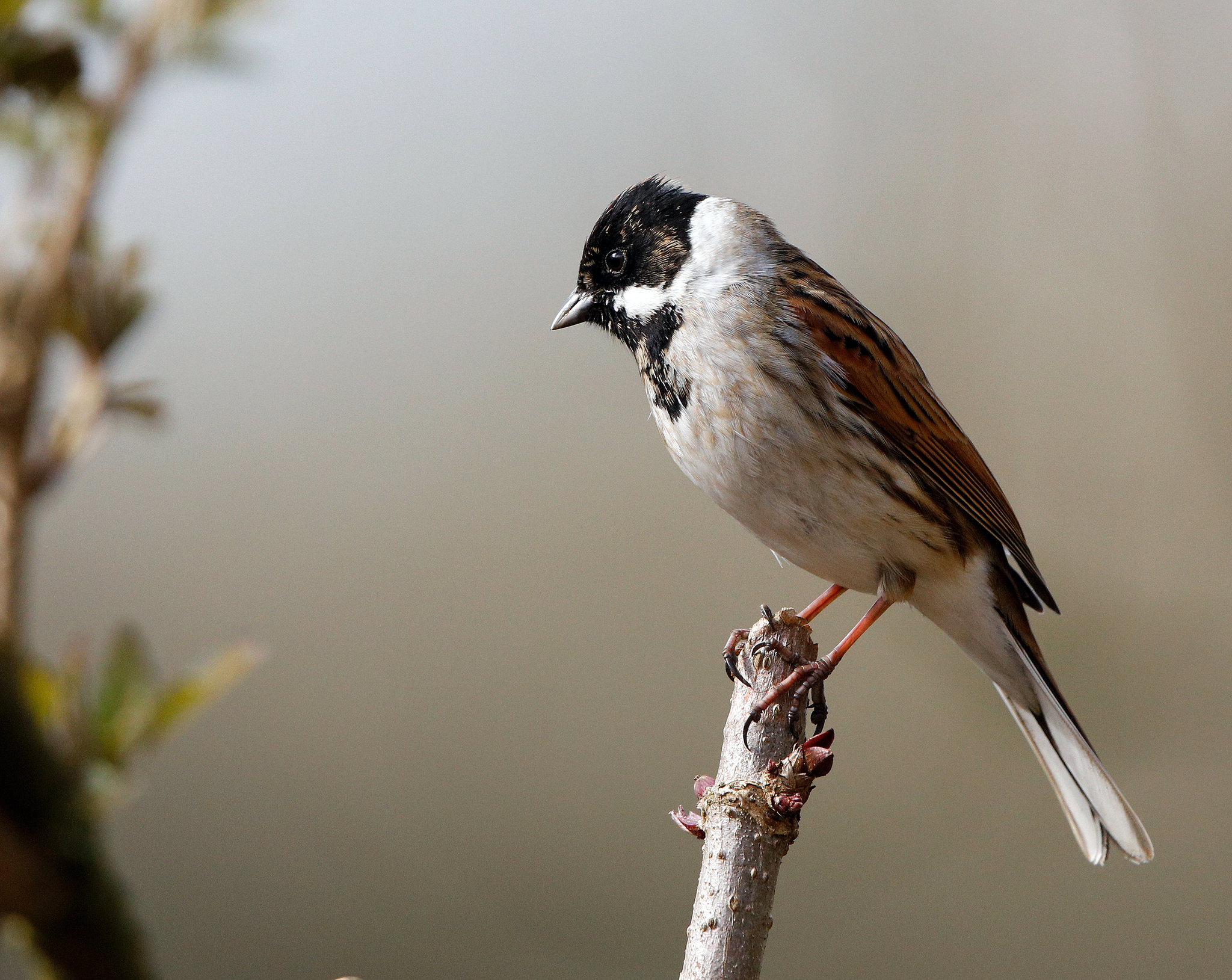
Schoeniclus schoeniclus
Identity and identification
The Common Reed Bunting belongs to Emberizidae. AviList 2026 uses Schoeniclus schoeniclus, while older sources call the same species Emberiza schoeniclus. Breeding males have a black head and throat with a white collar and moustache; females and juveniles have streaked brown heads.
Habitat and food
It uses reedbeds, grassland and farmland near water, taking seeds and invertebrates. Insects are particularly important for the chicks. Winter head patterns may look different from the familiar spring male.
Breeding and development
BTO gives a typical clutch of 4–5 eggs, incubated by the female for about 12–13 days. Young develop in the nest and normally fledge after 12–13.5 days. Leaving the nest does not mean immediate feeding independence.
Arab occurrence and seasonality
The 2026 Lebanon guide describes it as a scarce passage migrant and winter visitor from late October to early April, in wetlands and fields near water. November falls at the start of that period; this does not establish residency or breeding throughout Arab countries.
Observation and conservation
The species is globally listed as Least Concern (LC) on the IUCN Red List; local habitat protection remains important. The Lebanon guide identifies habitat degradation, agricultural practices and illegal hunting among its main pressures. Quiet observation along reed edges allows feeding birds to be watched without repeatedly flushing them. Retaining field margins and wetland vegetation supports winter food supplies.
References
AviList Core Team — Global Avian Checklist v2026, 20 October 2026؛ UNDP / ABCL / Ministry of Environment — Birds of Lebanon: A Photographic Guide to 409 Species, 18 June 2026؛ British Trust for Ornithology — BirdFacts: Reed Bunting؛ RSPB — Reed Bunting
Species illustration: Stephen James McWilliam — CC0 1.0.