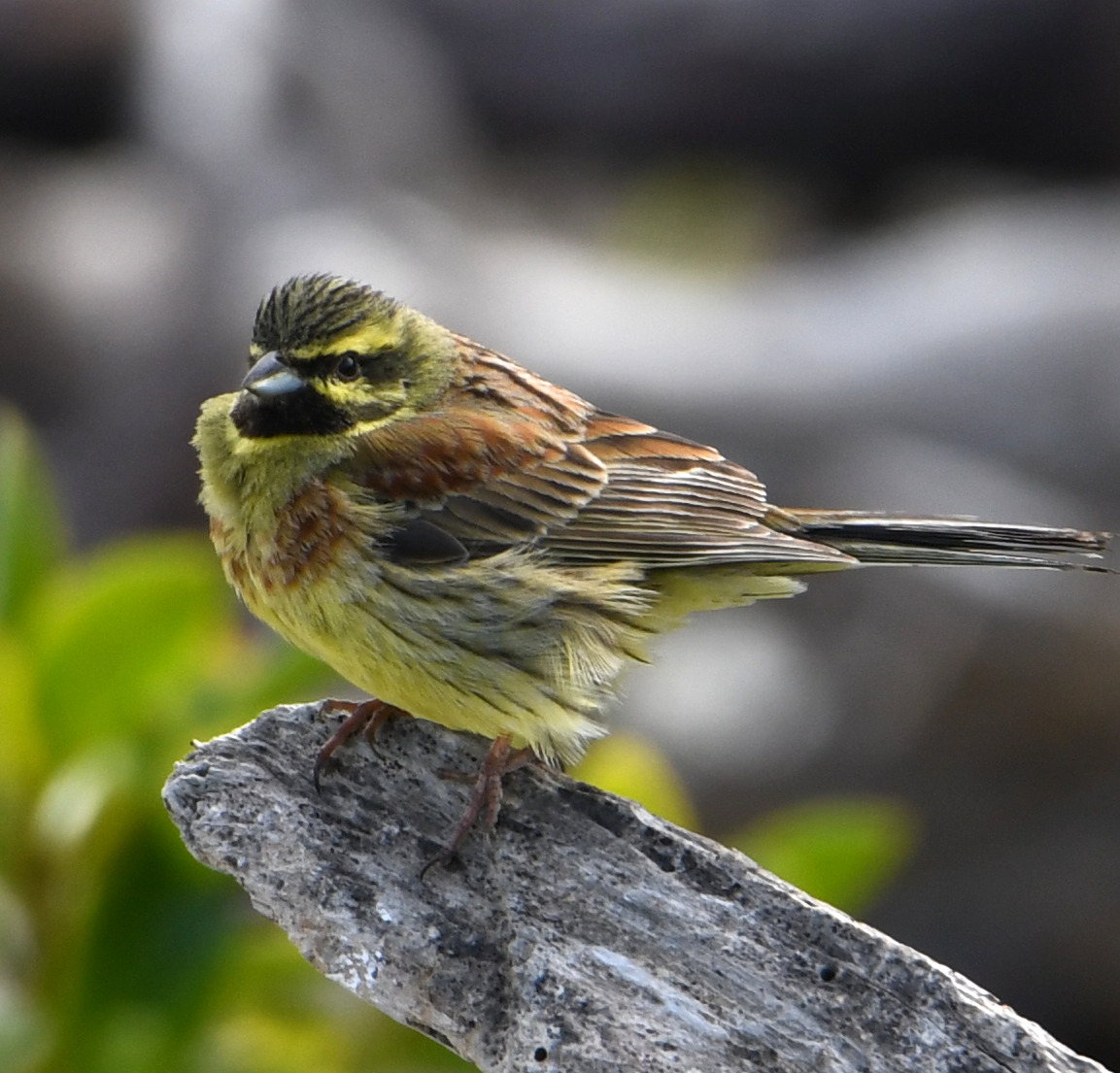
Emberiza cirlus
Identity, life and distribution
Cirl Bunting Emberiza cirlus is a bunting whose male has distinctive black-and-yellow facial markings. Females and young birds are less contrasting and can resemble Yellowhammers, requiring careful inspection of head and rump patterns.
Its recovery in southwestern England illustrates the value of suitable farmland habitat. Collaboration between farmers and conservationists helped the population grow after severe decline, with reintroduction in Cornwall.
In summer it needs invertebrates, with grasshoppers particularly important for chicks; winter food includes seeds in fields and stubbles. Thick hedges and scrub provide nesting cover, making nearby, year-round resources important.
BTO reports a typical clutch of three or four eggs. This is not a rule for every population or season, and seeing a pair alone does not demonstrate successful nesting.
Protecting hedges and food-rich places helps conserve its agricultural habitat. Population trends differ among regions; the British recovery alone does not describe its situation in southern Europe and North Africa.
BirdLife and IUCN include Morocco, Algeria and Tunisia in its native resident range. The selected photograph comes from New Zealand, where the species was introduced; it illustrates identity, not an Arab habitat.
www.bto.org — Cirl Bunting · www.rspb.org.uk — Cirl Bunting · www.rspb.org.uk — Cirl Bunting · datazone.birdlife.org — Cirl Bunting
Photo: Ben Keen