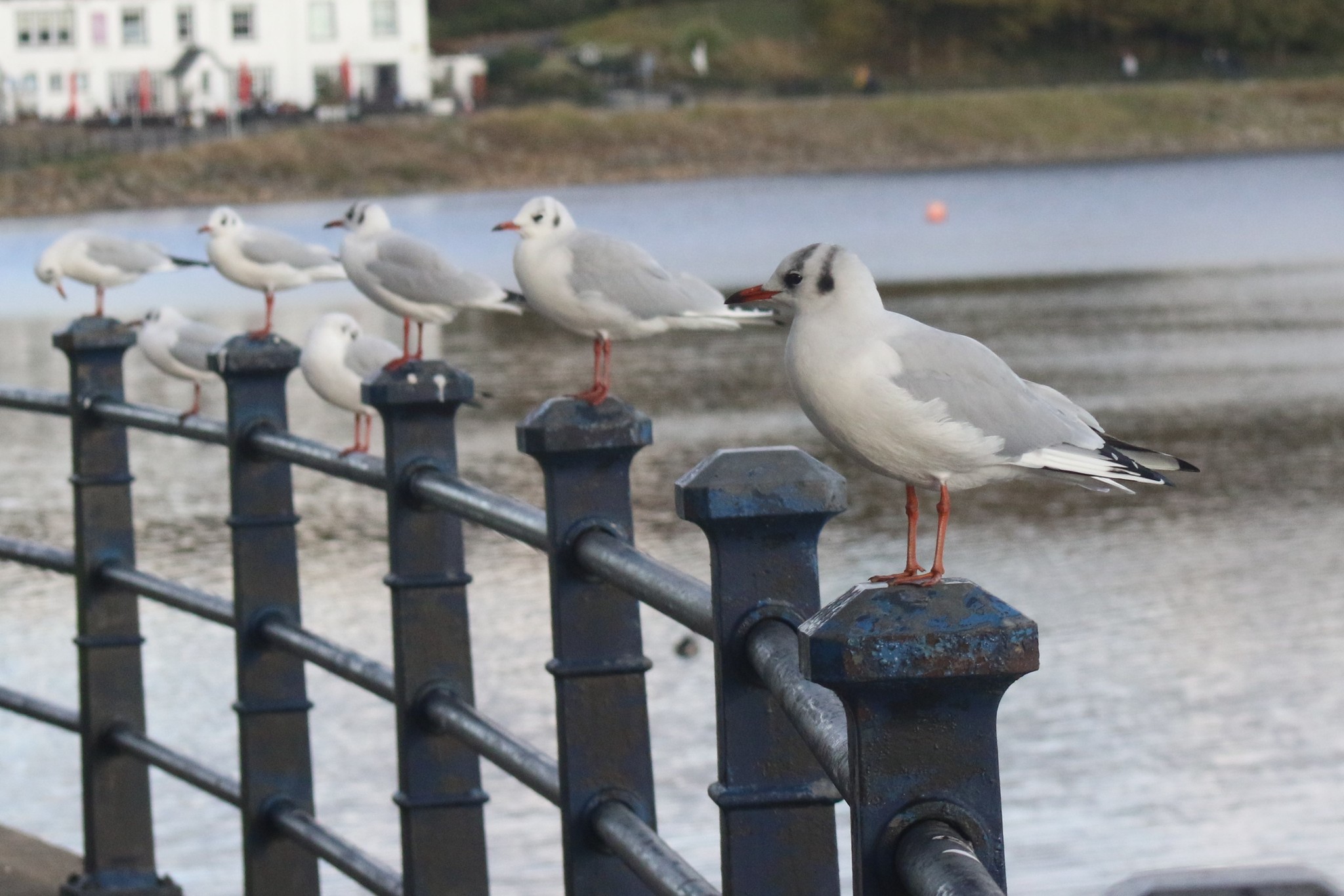
Chroicocephalus ridibundus
Identity and identification
Black-headed Gull Chroicocephalus ridibundus belongs to Laridae; older references use Larus ridibundus. The breeding hood is chocolate-brown. In winter it disappears, usually leaving a dark ear spot. Adults have reddish bills and legs.
Habitat and food
It uses coasts, estuaries, lakes and fields. Food includes invertebrates, small fish and items collected on land. A bird on a beach is not necessarily restricted to marine habitats.
Breeding and development
Colonies occupy vegetation or low ground, often near water. BTO gives a typical clutch of 2–3 eggs, shared incubation of 23–26 days and fledging at about 34–36 days. Before flight, chicks still depend on parental protection and feeding.
Arab occurrence and seasonality
Lebanon’s 2020 checklist describes abundant passage and winter presence from August to late April, peaking in November and December. Qatar’s current list calls it a common winter visitor. November offers a useful lesson in recognising winter plumage despite the species’ name.
Observation and conservation
Clean water and undisturbed resting areas matter. Its abundance should not be transferred to other gull species, and gathering near rubbish does not remove its need for natural habitat.
British Trust for Ornithology — BirdFacts: Black Headed Gull · RSPB — Black Headed Gull · Ramadan-Jaradi et al. — Updated checklist of the birds of Lebanon, Sandgrouse 42 (2020) · Qatar Bird Observation Group — Qatar Bird List · AviList Core Team — Global Avian Checklist v2026, 20 October 2026
Species illustration: Charlie Farrell — CC0 1.0. · 1 · https://creativecommons.org/publicdomain/zero/1.0/