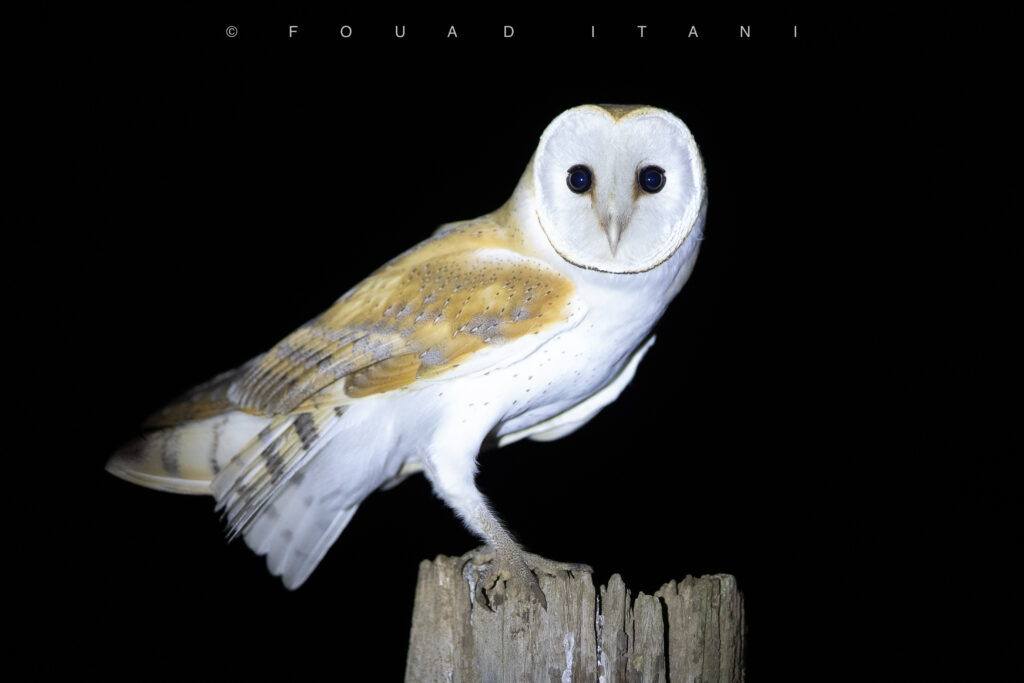
The Barn Owl (Tyto alba) — also called the barn or loft owl — is a common resident breeder across Lebanon’s coast, mountains, and Beqaa Plain: a silent nocturnal hunter of rodents, and a species still threatened by habitat loss, pesticides, and illegal killing.
The Barn Owl — also known as the loft or barn owl, and in English as the barn owl (Tyto alba) — is a common resident and breeder in Lebanon, found on the coast, in the mountains, and across the Beqaa Plain.
It can adapt to a wide range of habitats, from farmland and pastures to forests and residential areas.
Let us get to know it better…
The Barn Owl is a pale, medium-sized owl with a distinctive heart-shaped face and dark eyes, lacking the barring and streaks found in many other owls. The upperparts are creamy grey; the underparts are white, sometimes yellowish. In flight it shows slender wings and body, with white underwings.
Its heart-shaped facial discs help funnel sound to its ears. This unique facial feature lets it locate prey in total darkness by relying on acute hearing. Uneven ear openings allow it to pinpoint the direction of sound with remarkable precision — including prey under vegetation or snow.
The Barn Owl is an exceptional nocturnal hunter that primarily takes small mammals such as mice and voles in complete silence. Specialised wing feathers reduce turbulence, allowing it to approach prey without the usual whistling sound associated with flying birds.
It earned its name because it often roosts and nests in barns, abandoned buildings, and tree cavities. It does not build nests; instead it lays eggs on a bed of regurgitated pellets and prey remains.
Barn Owls regurgitate indigestible parts of their prey — bones and fur — as pellets. Scientists often use these pellets to study the owl’s diet and the local ecosystem.
For centuries the Barn Owl has been part of human folklore and symbolism. In some cultures it is seen as a symbol of wisdom and protection; in others it is linked to omens, superstition, and bad luck.
Despite its adaptability and wide distribution, Barn Owl populations face threats including habitat loss, pesticides, and illegal hunting.
Barn Owls are truly remarkable creatures that capture the imagination with their unique adaptations and mysterious behaviour — of lasting interest to bird enthusiasts and researchers alike.