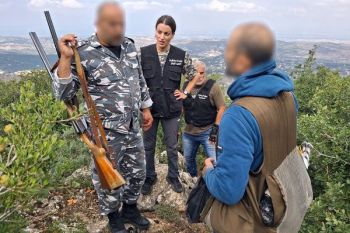
Field monitoring by CABS with MECSHAP and Lebanese security forces led to weapon seizures and documentation of gunfire directed at four honey buzzards.
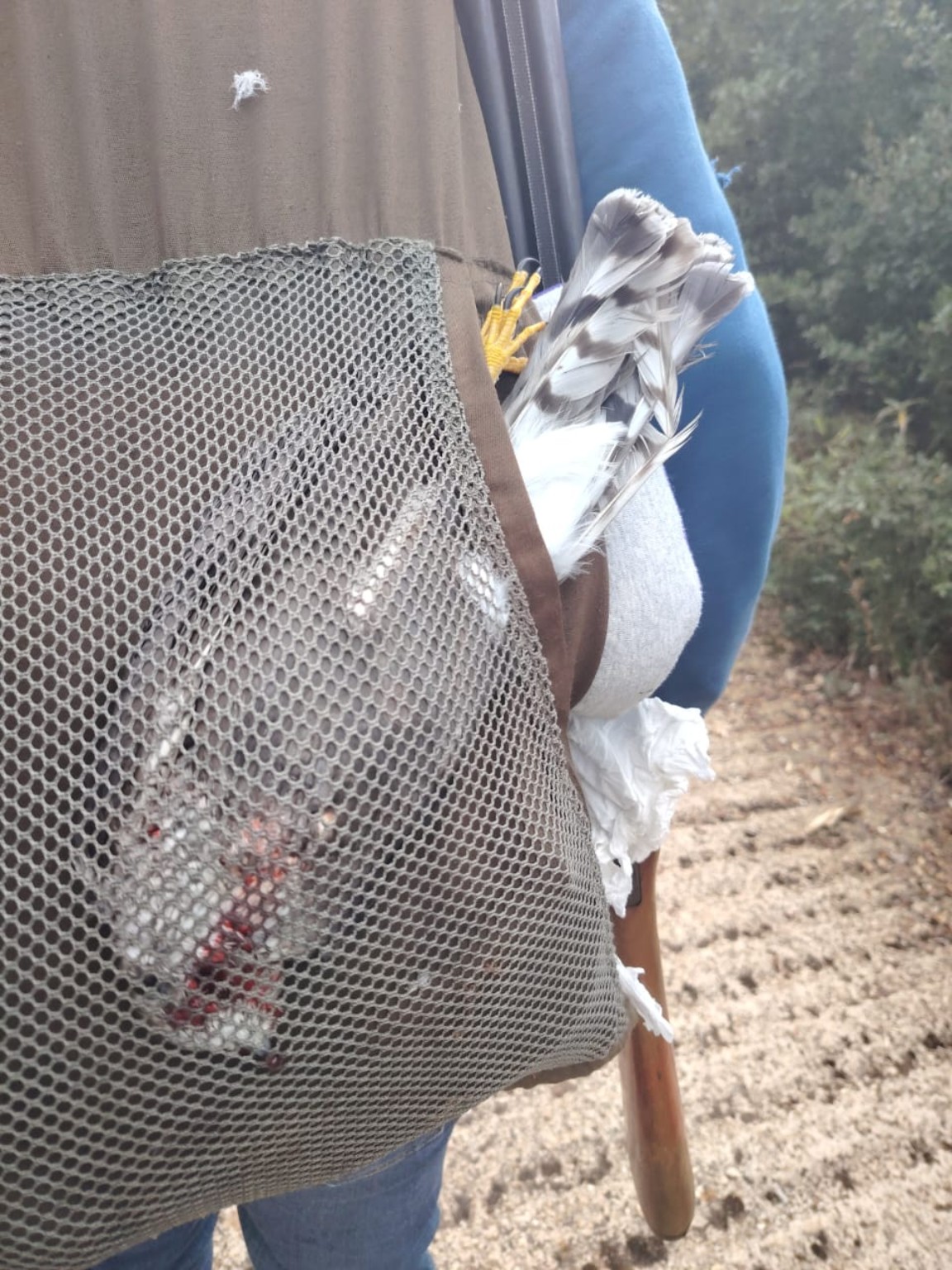
In the highlands of Akkar, crossed by migrating birds of prey, one unusual detail stood out during an anti-poaching operation: a sparrowhawk inside the backpack of a man stopped by Lebanese security forces.
According to the Committee Against Bird Slaughter (CABS), its team had been monitoring a mountain location in Akkar known for the illegal shooting of raptors, working with the Middle East Center for Sustainable Hunting and Anti-Poaching (MECSHAP) and the police.
CABS said officers detained two men at the site. One had the sparrowhawk in his backpack; the other was intercepted while walking towards his vehicle. According to the organisation, the second man had evaded arrest at the same location the previous autumn.
The two men were taken to a police station, their weapons were confiscated and criminal proceedings were initiated, the organisation reported.
The field operation did not end with those two men.
CABS said its observers also documented two other individuals shooting at honey buzzards, two birds each. The team tracked both men to their homes and handed information and evidence to the police for follow-up action.
The operation is part of the work of the joint Anti-Poaching Unit (APU, MECSHAP–CABS), in coordination with Lebanon's Internal Security Forces, to protect migrating birds and tackle illegal hunting of protected species.
The Akkar case illustrates the value of field monitoring, evidence gathering and cooperation between specialist teams and the security authorities in protecting migratory raptors.
Read also
Source: CABS