A string of reports and investigations from United Nations bodies and international human rights organizations reveals the scale of environmental destruction left by Israeli military operations in southern Lebanon — damage that, according to these actors, goes beyond the familiar frame of “collateral damage” in armed conflict and approaches the legal description of the crime of “ecocide.” Between the UN Development Programme and the UN Environment Programme (UNDP and UNEP), Amnesty International and Human Rights Watch, and specialist centers in forensic and environmental evidence such as Forensic Architecture, Stop Ecocide International, and CNRS-L, the testimonies and data converge on one picture: poisoned soil, scraped terrain, and collapsed natural habitats, in a region that ranks among the most sensitive waypoints on the global map of bird migration.
When Destruction Becomes a Legal Description
The traditional labels that confine war’s environmental impact to “collateral damage” are no longer enough to explain the scale and pattern of operations carried out by the Israeli army along the border strip it occupies in southern Lebanon. Investigations based on digital evidence and conflict-monitoring organizations now intersect with the contemporary legal definition of “ecocide,” as reflected in Article 8(2)(b)(iv) of the Rome Statute, which requires for the crime to be made out that the acts be intentional and systematic, and that they cause widespread, long-term, and severe damage to the natural environment.
The “scorched earth” strategy adopted through intensive incendiary bombardment, the demolition of border villages after they were seized, and the scraping of hills with D9 military bulldozers was not — on this reading — an incidental by-product of fighting, but a deliberate course aimed at stripping the area of any biological capacity to recover life, plant or communal, for decades to come.
Soil Sterilized by Fire
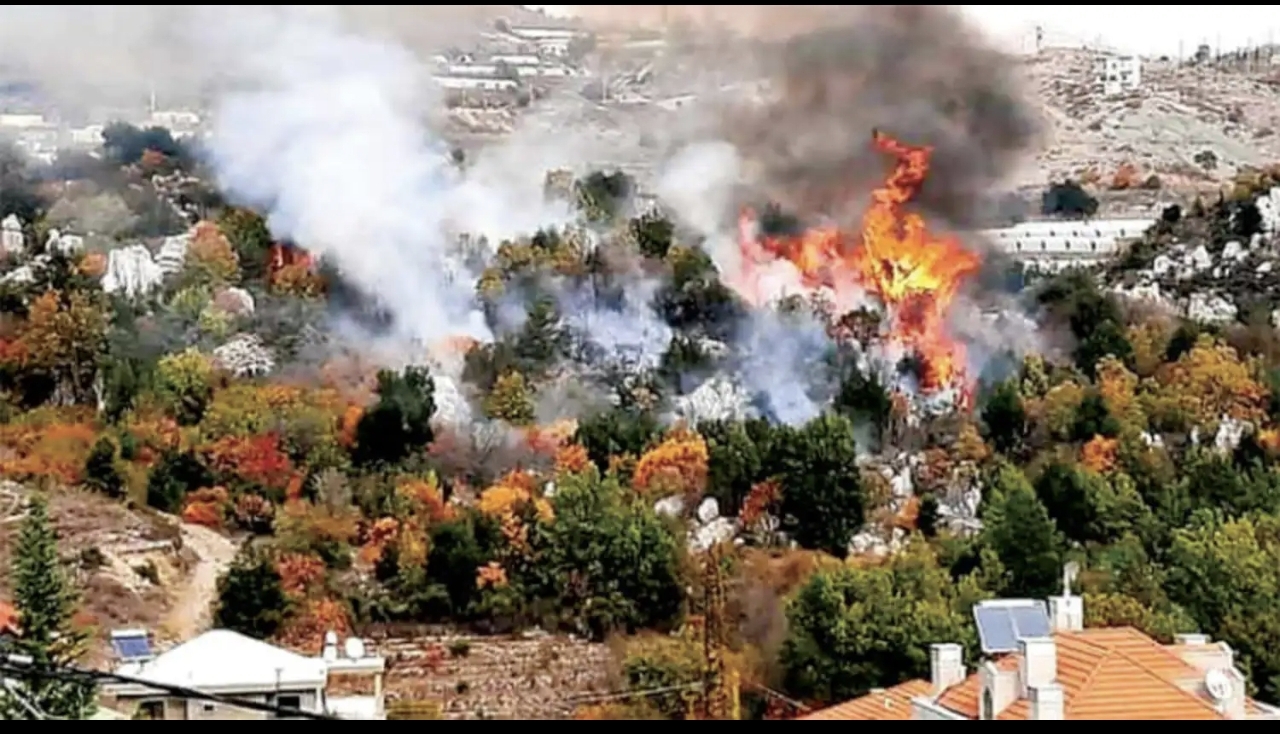
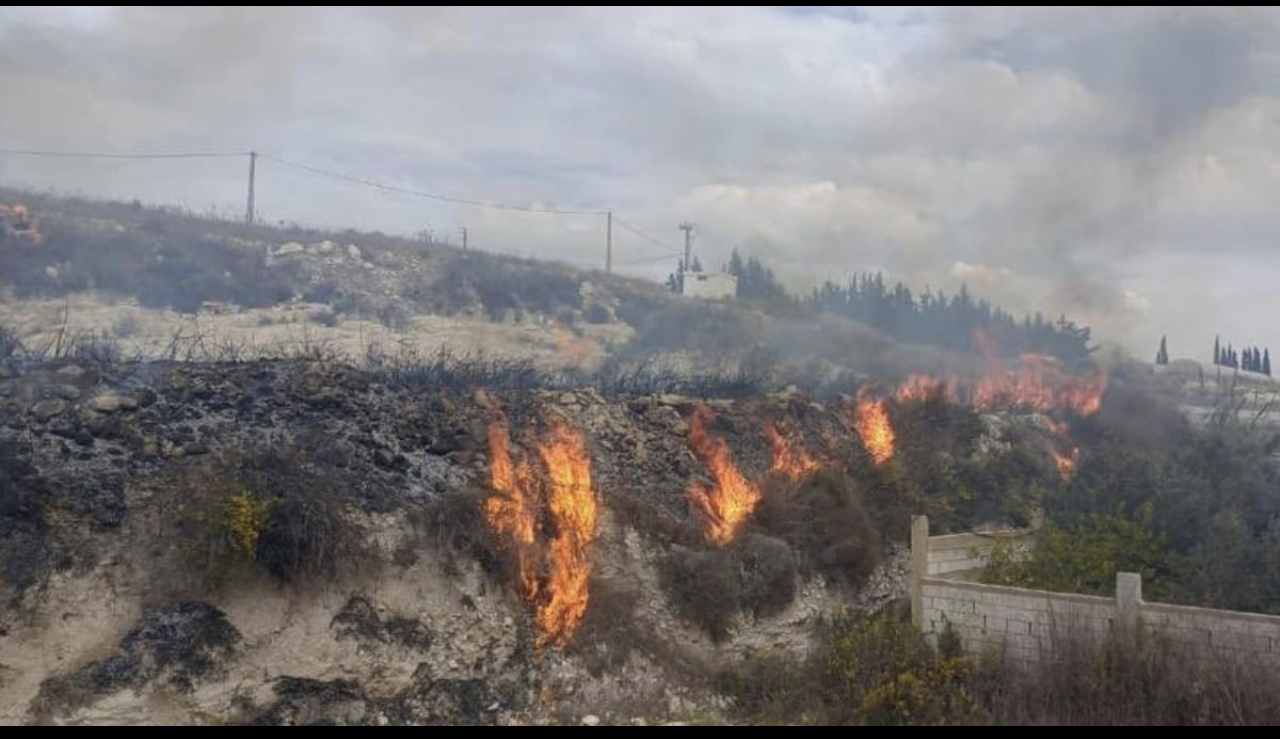
Field laboratory findings form the cornerstone of proving this long-term impact. Amnesty International and Human Rights Watch documented the dropping of 155 mm white phosphorus munitions over vast stretches of woodland and villages, from Al-Dhahira to Kfar Kila and Aita al-Shaab, in fires that consumed more than 18 million square meters of forests and age-old farmland. The effect does not stop when the flames die: white phosphorus burns at temperatures above 800°C — heat capable of what science describes as the “biological sterilization of soil,” as organic matter is carbonized and the microorganisms and symbiotic mycorrhizal fungi essential to fertility die off, turning fertile earth into inert matter unable to absorb water or germinate seed.
In parallel, comparative tests of soil samples conducted by scientific and medical bodies, including CNRS-L and field monitoring networks such as Amel International, showed dangerous rises in concentrations of heavy metals from exploding munitions and rockets — specifically lead, copper, zinc, and antimony, whose levels at some points reached many times their natural rates. That points to these toxins leaching into groundwater, then moving through the food chain into crops and livestock, and ultimately to people.
Erased Topography and Threatened Water
Analyses of satellite imagery (Sentinel-2), together with joint investigations by Forensic Architecture and Lighthouse Reports, showed that military scraping and the systematic booby-trapping of southern towns and villages were not incidental military activity, but a comprehensive topographic wipe that struck the land’s own features.
Uprooting hundreds of thousands of age-old oak and olive trees robbed the surface soil layers of their mechanical cohesion on mountain slopes, triggering sharp erosion with the first rains. At the same time, rubble from the demolition of neighborhoods, alongside chemical runoff, buried natural springs and polluted key tributaries — chiefly the Litani River basin, the Wazzani River, and border irrigation schemes — in practice striking water security in a region structurally dependent on farming and fresh water.
A Global Flyway in the Path of Explosions
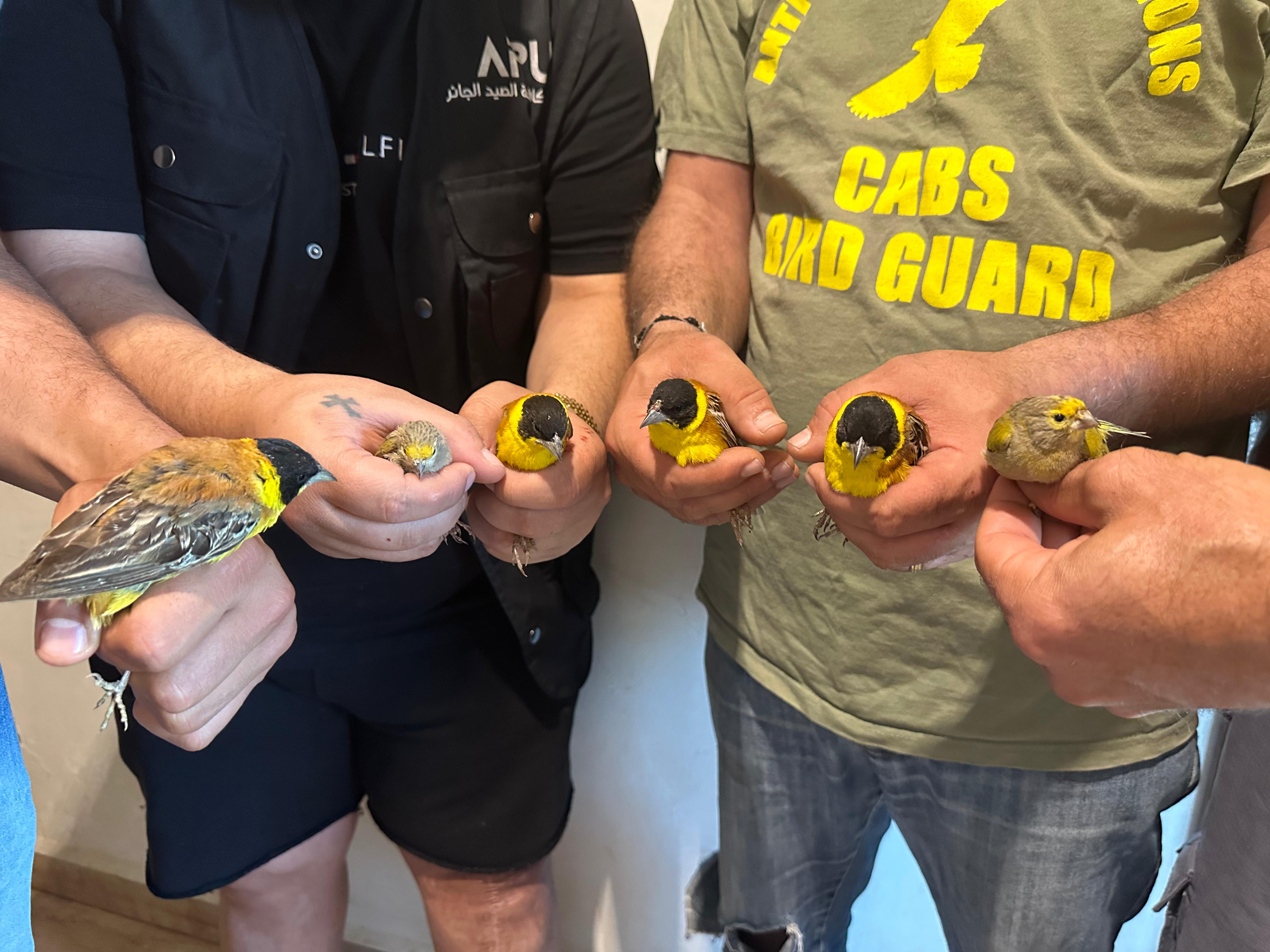
Southern Lebanon sits at the heart of one of the world’s most important aerial corridors for soaring migratory birds, within the Rift Valley / Red Sea Flyway — the planet’s second-largest artery for these migrants. Reports from international nature and bird-protection networks, including the Society for the Protection of Nature in Lebanon (SPNL) and BirdLife International, indicate that Israeli military operations have driven a real ecological break in this route.
Migratory birds — white storks (Ciconia ciconia), pelicans (Pelecanus spp.), steppe eagles (Aquila nipalensis), and other soaring raptors — cover thousands of kilometers over seas and rough terrain, depending entirely on the south’s valleys, oak woods, and the plains of Marjayoun and Al-Khiyam as stopovers to rest, drink, and feed on insects and rodents, rebuilding fat stores before crossing the African desert. With those habitats burned and scraped away, the vital waystations vanished, contributing to large-scale bird deaths from severe metabolic stress and hunger.
The impact was not limited to habitat loss. Continuous sonic boom noise, swarms of drones, explosive projectiles, and chemical smoke forced flocks onto longer, harder detours, scattering them, denying them the rising air currents they need to soar, and cutting the share that reach breeding and wintering grounds.
The decline of resident and migratory raptors — owls and common kestrels (Falco tinnunculus) among them — together with local predators, also stripped the southern ecosystem of its natural guardians, paving the way for explosions of rodent and crop-pest numbers on land that survived the destruction, and breaking a food-web balance that had held for centuries.
Conclusion: From Documentation to Accountability
These scientific and international documentary findings converge on the view that what southern Lebanon witnessed was not urban destruction alone, but a systematic undermining of ecosystems in which — according to these actors — the elements of the crime of ecocide are present. Restoring the health of this ecological system, the recommendations stress, cannot come through superficial fixes. It requires:
- Establishing the environmental criminal characterization before international forums and competent courts, as a step toward holding the responsible party to full environmental reparations.
- Launching advanced bioremediation programmes for soils contaminated with heavy metals before any return to farming.
- Urgent rehabilitation of bird stopover sites and nature reserves — saving a cross-border ecological artery that is not Lebanon’s alone, but bears on the continuity of biodiversity across the Eurasian and African continents.