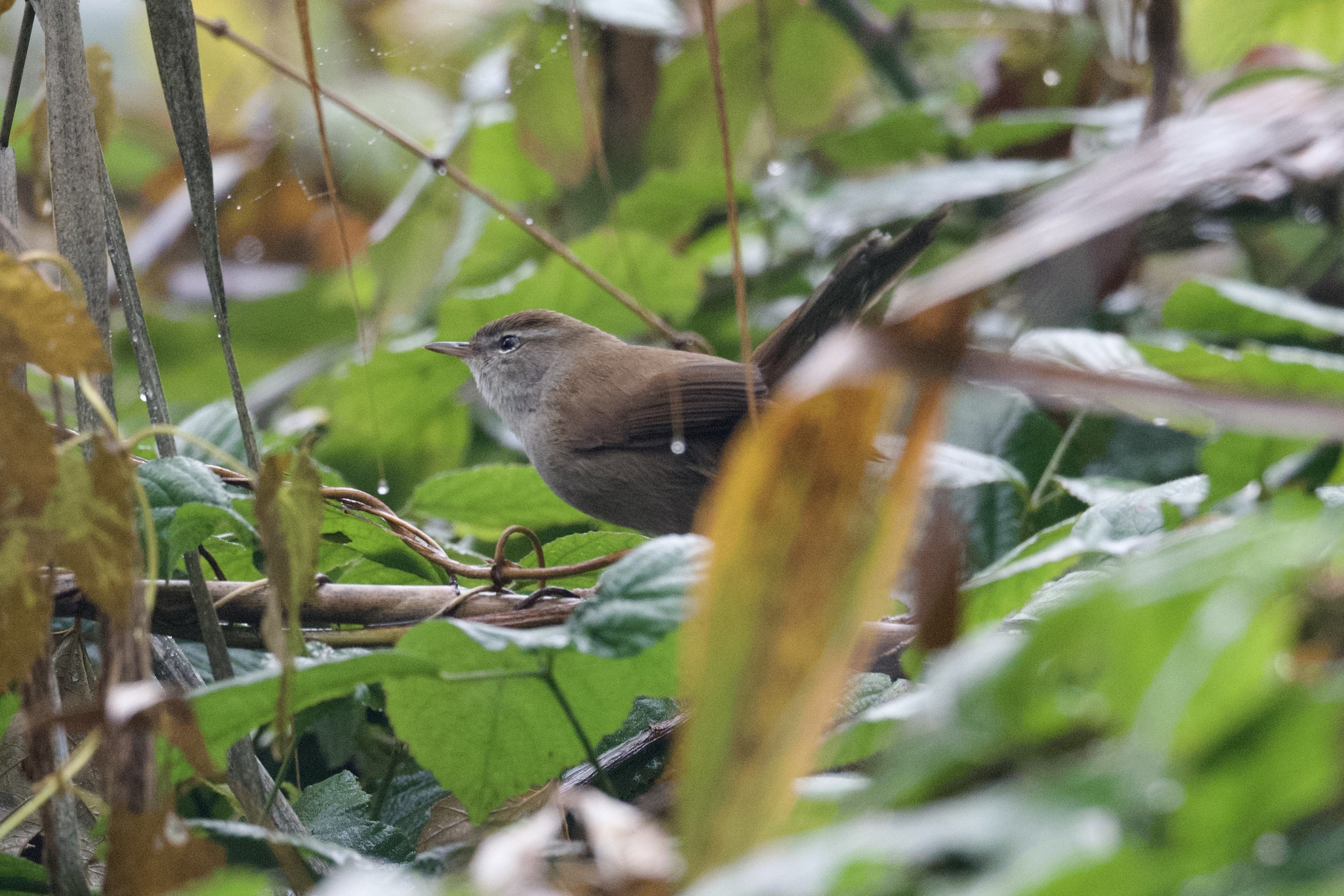
Cettia cetti
Identity and identification
Cetti’s Warbler belongs to Cettiidae. Reddish-brown upperparts, pale underparts, a fine eyebrow and a broad tail help identify this small bird. Its powerful song often reveals it before it emerges from dense cover.
Habitat and food
It inhabits reeds, brambles and dense vegetation near water, feeding mainly on small insects. Continuous wetland vegetation provides food and shelter throughout the year.
Breeding and development
BTO gives a typical clutch of 4–5 eggs, incubated by the female for about 16–17 days. The young need care and feeding in the nest and normally fledge after 14–16 days. These are general developmental intervals, rather than a fixed calendar across its range.
Arab occurrence and seasonality
The 2026 Birds of Lebanon guide describes it as a common resident breeder in dense vegetation near water. Its presence in November therefore continues a resident life cycle, rather than marking the arrival of a winter visitor.
Observation and conservation
The species is globally listed as Least Concern (LC) on the IUCN Red List; local habitat protection remains important. The Lebanon guide also identifies illegal hunting and agricultural expansion as pressures. Wait and listen from a path edge without entering reedbeds or using playback to draw birds out. Protecting river margins from drainage and fire conserves its habitat.
References
AviList Core Team — Global Avian Checklist v2026, 20 October 2026؛ UNDP / ABCL / Ministry of Environment — Birds of Lebanon: A Photographic Guide to 409 Species, 18 June 2026؛ British Trust for Ornithology — BirdFacts: Cettis Warbler؛ RSPB — Cettis Warbler
Species illustration: Dario Taraborelli — CC0 1.0.